Nitrogen is the single-biggest variable cost and is often the biggest driver of the water-limited yield gap in cereals, especially in favourable seasons. Increasingly, the environmental impact of nitrogen losses is under scrutiny around the world.
In recent decades, many intensive grain production systems have mined soil organic matter, reducing the soil’s ability to supply nitrogen and compromising soil fertility.
Increasing importance
OVER the past 30 years, demand for nitrogen fertiliser has increased four-fold.
Fertiliser purchases are typically about 20 to 25 per cent of the variable costs for Australian grain growers. Even before the recent price spikes, grain growers spent about $1.1 billion on nitrogen fertiliser each year.
Yet the yield potential of many cereal and canola crops remains limited by nitrogen. It is estimated that alleviating this deficiency could increase national wheat yields by 40 per cent and substantially improve farm profit.
Nitrogen deficiency also results in low grain protein content, reducing the value and marketability of grain.
Nitrogen losses – through denitrification, volatilisation and leaching – are more than just a direct cost to growers. Losses can damage waterways and their contribution to greenhouse gas production is a significant cost to the grains industry and the wider community.
The need to include emissions generated during the manufacture and distribution of fertiliser in the farm’s footprint makes it even more important to limit these losses.
Priorities
GRAINS Research and Development Corporation is committed to improving nitrogen use efficiency to help growers increase production and profitability, and reduce greenhouse emission intensity.
One of the biggest challenges faced by the industry is that much of the understanding of soil nitrogen dynamics was developed prior to the shift to continuous cropping and reduced tillage.
In the past, many growers relied on an extended legume pasture phase to restore soil nitrogen supplies and organic carbon. Today, legume crops play a role in boosting nitrogen supplies, but they are by no means ubiquitous in cropping systems around the country and the amounts of nitrogen they add to the system can be variable.
Several GRDC investments aim to update our knowledge of the factors that influence the cycling and availability of both soil and fertiliser nitrogen.
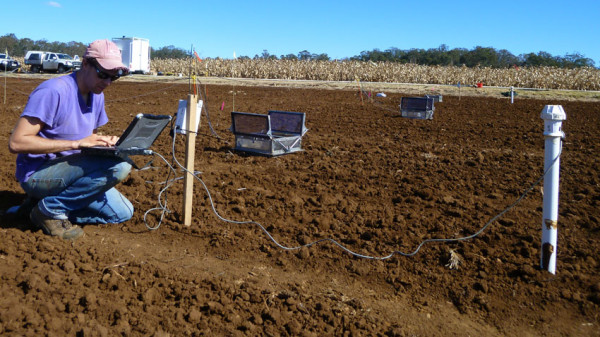
Last year, GRDC made a substantial investment in nationally co-ordinated research to better understand nitrogen losses as a crucial first step to reducing these losses and limiting their impact on the environment.
The knowledge gained through GRDC research is used to update the modelling that underpins nitrogen decision support tools and to better inform efficient use of nitrogen fertilisers.
Crop simulation models and their nitrogen cycling routines are also used to estimate greenhouse gas emissions for the grains industry. These are critical in demonstrating the grains industry’s sustainability credentials to the Australian and international communities.
Evolving grain production systems mean that ongoing research is vital to secure the future of our industry.
More details from Dr Cristina Martinez, 0482 952 781, cristina.martinez@grdc.com.au, and Dr Stephen Loss, 0408 412 453, stephen.loss@grdc.com.au.