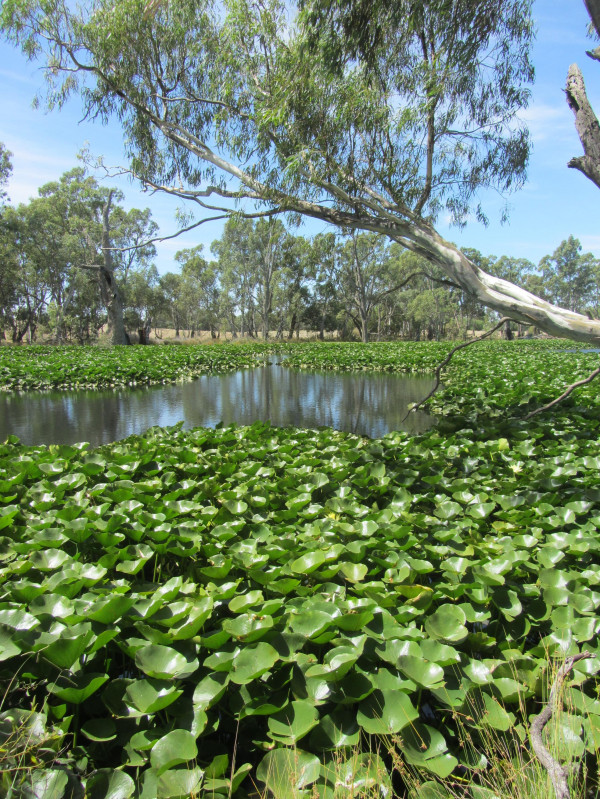
THE war on weeds by the North Central Catchment Management Authority is being ramped up, this time tackling key introduced species in and around waterways in the north of the region.
Its sights are set on three damaging introduced species within a wetland area protected under the International Ramsar Convention.
Pale yellow water lily is a South African invasive species that was introduced to a local farm dam a few decades ago, and quickly spread to nearby Gunbower Creek.
North Central CMA project manager Amy Russell said pale yellow water lily had significantly impacted irrigation and recreation use of the creek.
“It rapidly colonises shallow, nutrient-rich waters, resulting in dense infestations that restrict water movement and contribute to silt build-up in the creek,” she said.
“One of the best methods to kill it is by spraying, and we can only do that at certain times of the year. Lowering the water level in winter and making it vulnerable to the frost, as has been suggested in the past, will have little impact.”
North Central CMA has contracted Goulburn-Murray Water to begin the eight-week spraying campaign in December, once Murray River flows from Hume and Dartmouth dams subside.
“We’re targeting about 650 hectares of infestation in the creek and key lagoons, mainly between Cohuna and Koondrook weirs, and up to the national channel,” Ms Russell said.
“We’ll take a break over Christmas so there’s no spraying over the busy holiday season, but then we’ll ramp up again.
“This is an important job and one the community is right behind. It’s a challenging weed to treat, but we will continue to take as many steps forward as we can and assess year on year.”
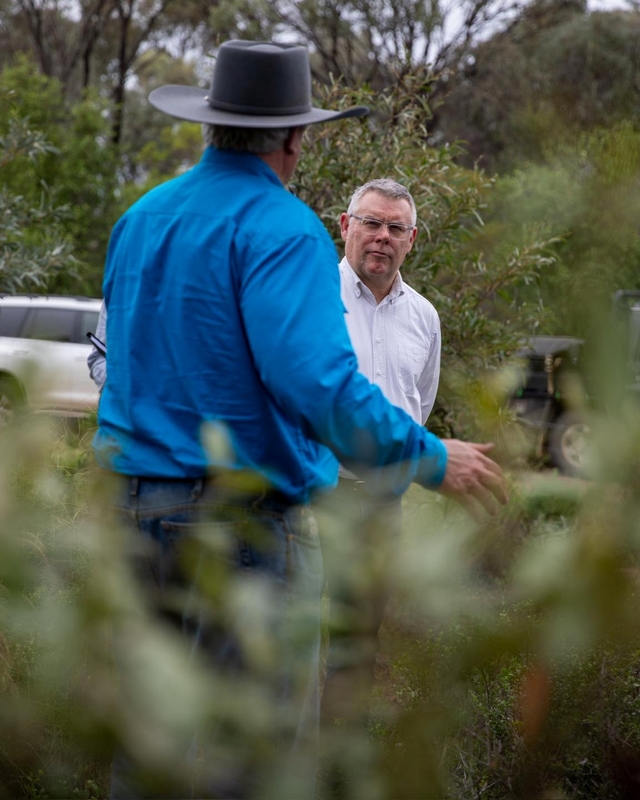
The CMA will also target bridal creeper along the banks of Gunbower Creek near the ski run, and infestation of horehound in the middle of the Gunbower Forest’s Reedy Lagoon horseshoe.
“That area in the middle of Reedy Lagoon is culturally sensitive and an area we’re really focussed on protecting,” Ms Russell said.
“We’ll revegetate with native plants once we have removed the horehound to help protect the area.”