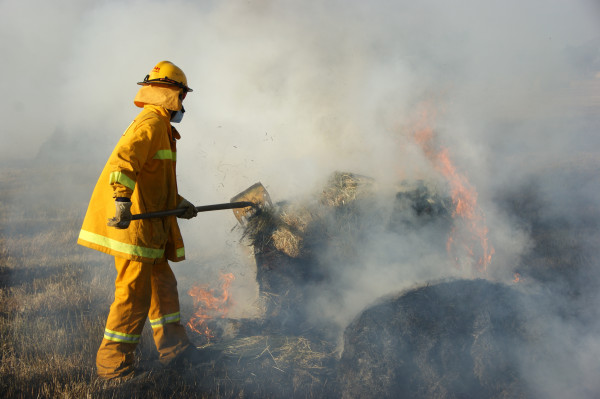
FARMERS in the western and northern parts of the state are reminded of the dangers of high moisture content in hay as they begin cutting, baling and storing it to beat the persistent rain.
Large areas of Victoria have experienced heavy rainfall in recent weeks, and some communities have seen major flooding, which will have an impact on the moisture levels of crops and fodder.
These wet conditions present a risk for farmers trying to prepare their hay while the sun shines to beat the next bout of predicted rainfall.
If hay producers do not allow adequate time for grass and crops to dry out before baling, it can present a high risk for spontaneous combustion.
If hay has not properly dried out or has been exposed to rain or damp conditions, the moisture content in the bales may be higher than the recommended levels, leading to elevated risk of haystack fires.
It is also important to consider the storage of hay, as significant rain to exposed haystacks are at risk from spontaneous ignition.
This can be better managed by storing undercover or using hay caps or tarps to restrict rain getting into bales.
CFA chief officer Jason Heffernan said if hay is baled with high moisture content, it can heat up like compost, which can lead to spontaneous combustion weeks or months later.
“Farmers who have decided to carry on with hay production need to be extra vigilant this year to make sure condition are right for making hay and for the future storage and transport of the product as well,” he said.
“Hay fires are a real threat to properties and stock in farmland areas.
“Whether you’re a seasoned hay grower or switching to hay this year, it’s really important to take care of your hay and crops this fire season.”
CFA responded to almost 50 haystack related fires between July 1, 2021 and June 30, 2022.
Haystack fires can also start easily from lightning strikes or sparks from equipment.
“You should regularly monitor your haystacks by using a temperature probe or a crowbar to detect heating hay,” Mr Heffernan said.
Signs of heating hay can include steam rising from the stack or unusual odours like burning, must, pipe tobacco smell or a caramel smell.*breaout*
Haystack Tips
• Ensure hay is well cured before baling
Know the history of the hay you purchase
• Keep haystacks to a limited size and separate your haystacks
• Monitor moisture and temperature of your hay regularly
• Watch for unusual odours such as pipe tobacco, caramel, burning or musty smells.
• Store hay in separate stacks or sheds away from farm equipment and other buildings.
• Keep your hay dry. Protect it from rain, leaking rooves or spouts, and runoff. Cover stacks with tarps or hay caps.
• Don’t stack hay right to the top of a hay shed. Allow some air to circulate at the top – this helps to carry away moisture