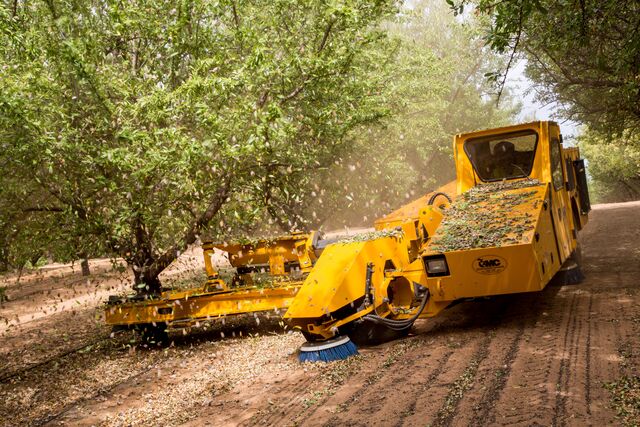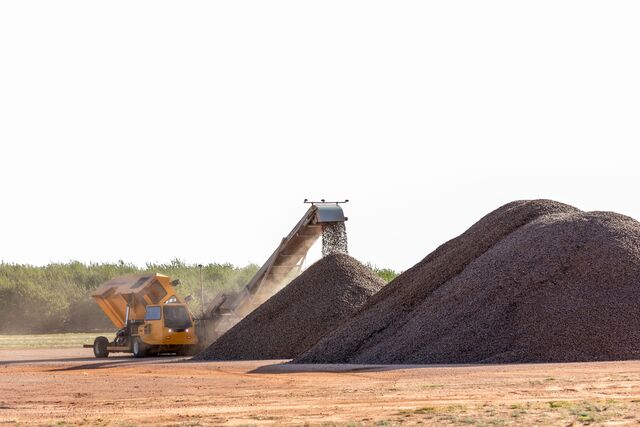
It’s been an eventful start to harvest for the almond industry.
Like all of agriculture in the region, Mother Nature and geo-political tensions have played a hand in providing extra challenges of late.
The extreme heat of late January has been followed with almost biblical rainfall and potential fuel shortages.
The deluge received across the Sunraysia recently – the Bureau of Meteorology figures show Mildura received 150mm in 36 hours (but gauge readings range drastically) – brought the almond harvest to a standstill.
While some growers were back in machinery in a matter of days after the big wet, others have had to wait significantly longer.
Almonds already on the ground had to be picked up, dried out and segregated before shaking could restart.
Growers and processors will be doing all they can to optimise the value of those early varieties caught up in the rain.
Some have invested a significant amount in drying technology, but nothing beats a warm dry environment to recondition a crop for hull and shelling.
While the timing of the rainfall could not have been worse and the sheer volume caught everyone by surprise, we recognise the need for rain across the region.
Two years of receiving less than half our annual average takes its toll.
It was difficult to stomach that while mopping up after such heavy rain, the price of water on the temporary market was still over $400 per megalitre.
The resilience demonstrated by those in horticulture is to be admired.
We spend a year devoted to cultivating a crop and then face challenges that could impact our income at the last moment.
The Almond Board of Australia has a series of resources to help growers with wet harvests.
Fact sheets, videos and a podcast were developed in the early 2020s when La Nina created wet conditions.
The strategies recommended in these resources are still relevant today.
Head to almondboard.org.au and search for Adverse Weather at Harvest to find this information.
Our Industry Development Team is also available to help growers:
• Josh Fielke – 0408 031 991
• Deidre Jaensch – 0429 007 200
• Peter Reynolds – 0459 301 734
Over the past fortnight the impact of the war in the Middle East has reached our region as well with fuel shortages being reported across regional Australia.
We have been asked to encourage growers who are having issues sourcing fuel to contact the Federal Government.
The uncertainty of fuel supply has farmers rightly trying to secure supplies to complete harvest and the ABA is advocating for a far more co-ordinated approach to distributing fuel.
We would welcome agriculture production being a key consideration in enacting the Liquid Fuels Emergency Act so there is a long-term approach to manage the nation’s fuel stocks.
It remains unclear how long the war will continue so taking a controlled approach to managing stocks should be adopted until there is great certainty of the supply.
The approach should also tackle the cost of fuel as current inflated prices will inevitably have a knock-on impact to on-farm viability and supply chain costs.
A taskforce has been established within the Department of Agriculture, Fisheries and Forestry to determine the extent of the issue and the locations that are impacted the most.
The taskforce can be contacted via email: CEMB@aff.gov.au.
The ABA is also eager to monitor the feedback provided, so please also include communications@australianalmonds.com.au on your emails to the taskforce.
This will enable us to be aware of the responses submitted by the almond industry.