GROWERS in the Northern Mallee are facing some of the worst seasonal conditions on record, experts have warned, with many paddocks left “bare and vulnerable” due to “extremely poor” growing conditions for the past two years.
Scarce rainfall since early 2024 has resulted in some of the lowest levels of ground cover on record, and increased the risk of wind erosion across sandy soils.
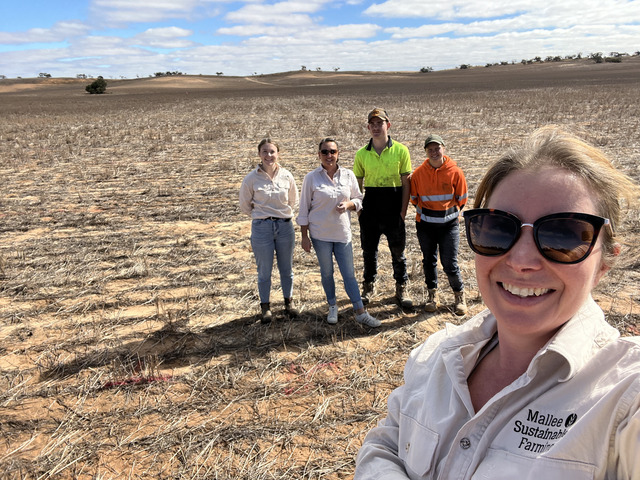
Mallee Sustainable Farming research manager Dr Penny Roberts is part of a team looking at new approaches to erosion risk assessment and intervention.
“The reality is, even with good management, if there is not enough rain to grow biomass, there’s little that can be done to establish a protective cover,” she said.
“This has been a recurring challenge since early 2024, particularly when weather models had a high probability of a wetter-than-average season. Unfortunately, as can sometimes happen, the opposite has played out.”
MSF is leading a new project utilising technology to track vegetation cover and provide early warnings to growers when conditions indicate high erosion risk.
When groundcover falls below 70 per cent in spring, Dr Roberts said the risk threshold is met for wind erosion across the Mallee in the following season.
“Early information on cover conditions before sowing gives growers the ability to adjust cropping plans or grazing management before the risk becomes a reality,” she said.
MSF will trial a range of practical interventions aimed to protect soil surfaces and stabilise vulnerable paddocks, working alongside the Grains Research and Development Corporation, the Murraylands and Riverland Landscape Board, and DustWatch Australia.
Director of DustWatch and leading Australian wind erosion expert, Dr John Leys, said the situation in the Mallee is dire.
“The average total cover in the Victorian Millewa for July 2025 is around 55 per cent, comparable to the severe 2019 season,” he said.
“The green cover is the lowest July on record and there are very few paddocks with any green growth and the South Australian Northern Mallee has similar challenges.”
Research activities set to be undertaken include testing soil-binding agents to reduce sand drift risk, and investigating whether inter-row cover options and fast establishing species, as well as high seeding rates, could boost early groundcover.
MSF will also assess paddock conditions in autumn to better inform early-season decisions on crop selection, establishment, or grazing.
As research develops, local demonstrations and knowledge-sharing sessions will assist growers to stabilise vulnerable soils and make informed decisions as seasonal variability increases.
Funding was made available to MSF through the Federal and South Australian Governments, along with the Grains Research and Development Corporation.