A national research project is underway to give Australian grain growers access to acid-tolerant, locally adapted chickpea varieties as a profitable pulse option in their farming systems.
A Grains Research and Development Corporation investment, the project is led by Murdoch University in partnership with the Department of Primary Industries and Regional Development in Western Australia and Agriculture Victoria.
Project lead researcher and director of the Western Crop Genetics Alliance, a partnership between DPIRD and Murdoch University, Professor Chengdao Li, said that acidic soils were a significant limitation towards improving chickpea productivity in Australia.
“In growing regions such as Western Australia, over 75 per cent of cropping areas have acidic soils in the top or sub soils,” Professor Li said.
”With the exception of lupins, legumes do not usually adapt well to these soils.
“We estimate that chickpea varieties with tolerance to acidic soil could help expand Australian chickpea production into an additional 1.2 million hectares.”
Building on previous research by the University of California, Davis, chickpea progenies from crosses between different species were imported through the Australian Grains Genebank. The project is evaluating these lines in Western Australian environments.
Researchers working on the project are also examining genetic factors that influence acid tolerance, specifically tolerance to aluminium toxicity, to develop new, locally adapted chickpea germplasm which will be used by the national chickpea breeding program to develop varieties with acid soil tolerance.
In addition, they will evaluate these new lines with acid soil tolerance in diverse environments in western, southern, and northern Australia.
Professor Li said the team was working to identify key genetic markers that will help breeders and researchers to accelerate and transfer tolerance genes into new chickpea varieties for growers.
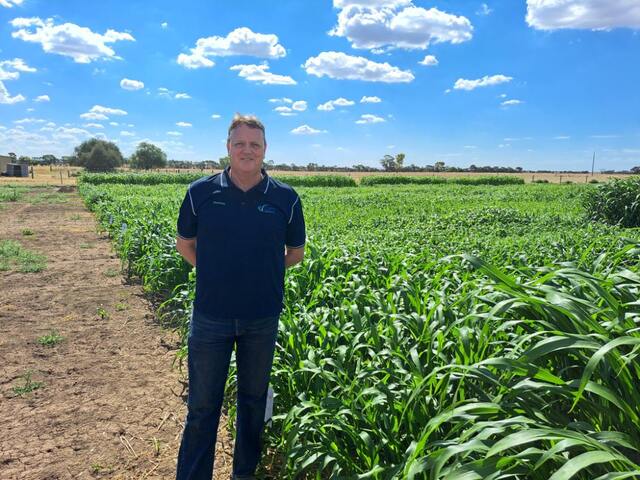
Trials are underway at Merredin in WA this season, led by DPIRD grains genetic improvement manager Dr Darshan Sharma, testing the imported lines on Western Australian soils.
“This is the first time we have grown these international chickpea lines in farmers’ paddocks, to examine their genetic performance under local conditions, and to identify other factors limiting chickpea productivity on acid soils,” Professor Li said.
“We are working very closely with chickpea breeders, almost in parallel, so the acid-tolerant germplasm and genetic markers that are being identified are delivered to the breeding program as soon as possible.”
Once key genes for acid tolerance have been identified, the next step will be to undertake an accelerated breeding process, to rapidly develop new locally adapted genetic material, to test in growers’ paddocks.
In addition to focusing on aluminium toxicity, the team will also examine the interaction of these new lines with magnesium toxicity, rhizobia and liming practices.
GRDC senior manager of genetic technologies – pulses, Dr Francis Ogbonnaya, says the four-year project would facilitate chickpea production expansion on soils where acidity currently precludes chickpea cultivation, to give Australian growers pulse crop options.
“This project aims to give chickpea breeders the knowledge, tools and chickpea germplasm with tolerance to acid soils,” Dr Ogbonnaya said.
“We anticipate that breeders will be deploying these tools in breeding programs within the next four years.
“Ultimately, the project aims to deliver improved, higher yielding, acid-tolerant locally adapted chickpea varieties as a profitable pulse option for Australian growers.”