Online tool to help prepare for climate risks

Farming communities have been dealing with drought, floods, fires and other changes in the climate for a long time.

But with extreme weather predicted to become more frequent across much of Australia, it is clear farmers need forward thinking to keep their farms, land and communities thriving.

There are lots of things farmers can do to ensure they are prepared for drought.

There are many examples of farmers who have been able to stay more productive, and recover faster, following drought because of the way they manage their land and natural resources.

On the environmental front, managing groundcover, water flow, soil carbon and moisture, and switching to alternative fodder and crops, as well as various grazing and cropping strategies are some of the options.

But the first step is making sure you’ve got the right information so you can make the right decisions. DR.SAT (which stands for Drought Resilience Self-Assessment Tool) is a free online tool now available to support farmers in better decision-making.

It’s the first of its kind, combining satellite data at a farm-level, with trustworthy farm-level climate projections, and the ability for farmers to ‘sense check’ their level of resilience and get tailored options that can help them better prepare for future drought and climate risks.

By logging on at www.drsat.com.au, you’ll be able to explore this free tool and have:

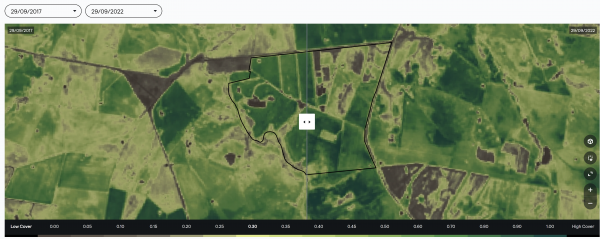
1. The ability to input details about your farm and see satellite images of historic and current condition, including ground vegetation, surface moisture and land surface temperature specific to your farm (updated roughly every six days).

2. Climate projections for your property and region for 2030 and 2050.

3. Simple questions about your land condition, financial, physical and mental wellbeing to assess your resilience, including options for the future with links to resources to support in building your resilience.

DR.SAT was developed with farmers, for farmers, and it taps into expert advice from industry bodies, farm business advisors and others.

It uses climate data from Climate Services for Agriculture (CSA) a joint initiative of the Bureau of Meteorology and the CSIRO.

Since the first release of DR.SAT in December 2021, the tool has evolved from a focus on cattle grazing and dry land cropping to now include commodities such as sheep, wool, dairy, citrus and temperate fruits.

DR.SAT can be used by all Australian farmers, but provides deeper insights in specific regions and commodities.

For sheep producers (both meat and wool) in Condamine and the Northern Tablelands of NSW, the Victorian Mallee and the WA Sheep Wheatbelt for sheep, you can get specific insights to build your environmental resilience.

This will expand to national coverage at the end of 2022.

To contribute ideas, feedback or if you have any questions about the tool, reach out to the DR.SAT Help Desk at help@drsat.com.au

More information www.drsat.com.au
Digital Editions


  • Collection under the hammer

    Collection under the hammer

    AN eclectic curation of vintage and antique Australian pastoral machinery and memorabilia will go to auction on 1 February. Yvon Smythe and her late partner,…

More News

  • Calls flow for royal commission

    Calls flow for royal commission

    Purchase this photo from Pic Store: 524159 AUSTRALIA needs a royal commission into water management in 2026, according to Murray MP Helen Dalton, who says politicians are “destroying” the nation’s…

  • Big skies and farmscapes

    Big skies and farmscapes

    Purchase this photo from Pic Store: 524028 THE Gallery Balranald is currently showcasing the work of professional artist Graham Hearn. His latest exhibition, Big Skies and Farmscapes, reflects the vast scale and…

  • Difficult outlook for grape growers

    Difficult outlook for grape growers

    Murray Valley Winegrowers has acknowledged the findings of Wine Australia’s Australian Wine Production, Sales and Inventory Report 2025, which confirms the challenging market conditions facing growers. The newly released report…

  • Benham appointed to new ag role

    Benham appointed to new ag role

    The Nationals member for Mildura, Jade Benham, has been appointed Shadow Assistant Minister for Agriculture and Regional Development, as part of Jess Wilson’s new Shadow Cabinet announcement. Ms Benham said…

  • Connecting urban and rural Australia

    Connecting urban and rural Australia

    HAMISH McIntyre grew up on the land in Queensland, learning the rhythms of farming from his family. Today, he runs a sprawling family business across the St George, Dirranbandi, Quilpie,…

  • Farmers warned to stay alert

    Farmers warned to stay alert

    A RUN of booming haystack and shed fires across regional Victoria has sparked fresh warnings for farmers as hay season rolls into full swing. Fire crews in the west and…

  • Bumper harvest fuels Cobram Estate’s growth

    Bumper harvest fuels Cobram Estate’s growth

    COBRAM Estate Olives has reported one of its strongest years on record, with an exceptional “on-year’’ harvest in Australia driving improved earnings, higher production volumes and a confident outlook from…

  • Select Harvests’ cracking pace

    Select Harvests’ cracking pace

    SELECT Harvests Limited has released its 2025 business update, reporting a final almond crop estimate of 24,700 tonnes, slightly below the midpoint of its earlier forecast. The company says the…

  • Further water buybacks anger farming industry

    Further water buybacks anger farming industry

    FARMERS, politicians and advocacy bodies are warning further water buybacks announced last week will gut regional towns, drive up food prices and cripple Australia’s dairy heartland. Federal Water Minister Murray…

  • Farmer takes action in feral pig fight

    Farmer takes action in feral pig fight

    IN THE heart of south-western New South Wales, sheep and cattle farmer Colin McCrabb is waging a quiet war against a destructive and elusive enemy -feral pigs. Operating a 6800-hectare…