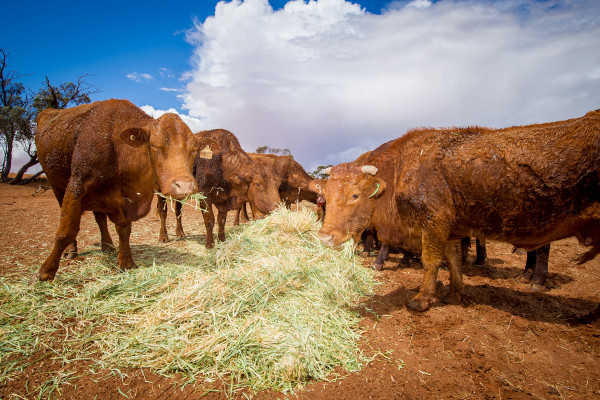
LIVESTOCK owners looking to use alternative feeds as the drought continues in the southwest and dry conditions extend in other parts of the state, are urged to be aware of the risks and limitations.
As most by-products are produced as surplus from food making industries, they can have their challenges when used as feed alternatives for livestock.
Therefore, you need to consider your animals’ fibre needs first and build from that base.
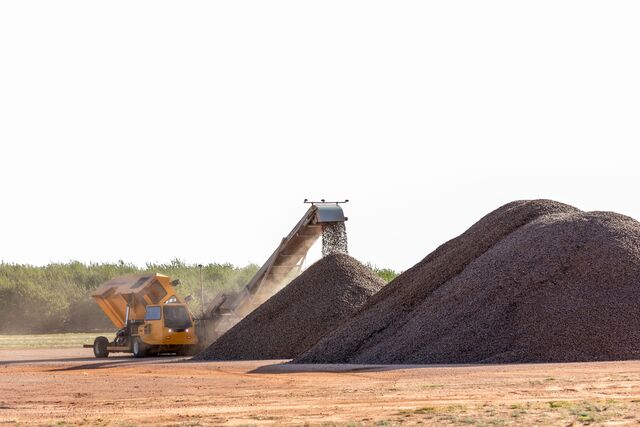
For example – an option such as palm kernel expeller (PKE) is becoming more popular, and while it is high in fibre, the fibre is not functional in the rumen, so you still need hay or straw in the diet.
PKE also needs to be stored dry to use safely.
Another key consideration is to check by-products are free from restricted animal material.
For example, using bakery waste such as bread rolls could be illegal if they have bacon in them, or have come into contact with meat products.
Restricted materials also include rendered products, such as blood meals, meat meals, meat and bone meals, fish meals, poultry meal and feather meal, and compounded feeds made from these products.
Another concern is chemical residue levels. By-product material such as citrus pulp, fruit pomace, grape marc, vegetable skins, and outer leaves can have concentrated levels of agricultural chemicals which could increase livestock residue levels. Which may lead to withholding periods for meat and milk.
For this reason, producers will need to declare if they have fed by-products on their National Vendor Declaration (NVD) within 60 days of selling livestock.
With hay getting dearer, more farmers will be looking at alternative feed sources, and it pays to spend time before you purchase to think through the risks, practicalities and considerations on how by-products can fit into to your farming operation.
My three top tips for producers to think about when purchasing alternate stock feeds:
1. Never feed restricted animal material.
2. Be aware of chemical residues.
3. Ask for and provide the required vendor declarations.
To help farmers with decisions around alternative feed sources, Agriculture Victoria is holding a webinar on May 28 from 12.30 pm.
Register at https://us06web.zoom.us/webinar/register/WN_TMeJYc4zSXmwMxMcggm3qg#/registration