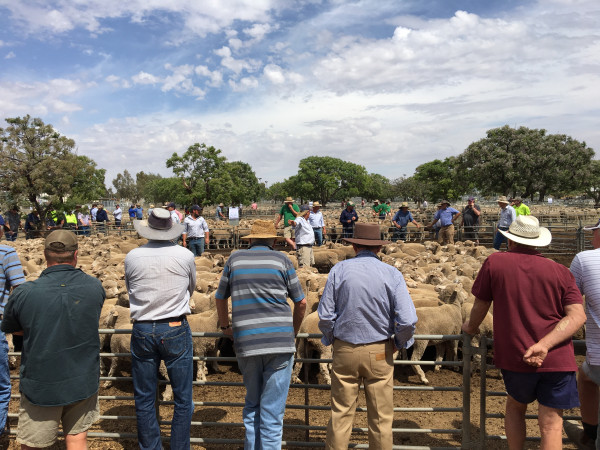
SWAN Hill Rural City Council’s proposal to ‘strategically review’ the future of what it describes as its financially underperforming saleyards has sparked deep concern across the region, and rightly so.
Because in these turbulent economic times, strategic review is the trendy terminology for things which are on the chopping block.
These yards are a vital part of our community, and they are a driving force for local business, especially on sale days when the town sees a significant boost in activity.
Their closure would not only deal a blow to businesses which rely on this influx, but also threaten local employment.
As Ouyen producer (and former chairman of PrimeSafe and Cattle Council of Australia executive member) Leonard Vallance correctly pointed out during a recent public meeting on the matter, the number of people coming through Swan Hill on sale days don’t just attend the sales; they also shop locally, fill up at local service stations, and make use of other town services.
If they are instead forced to travel to Mortlake or Benalla, they’re unlikely to make a second trip back to Swan Hill, so the town can kiss that cash injection goodbye.
Also pushing back against the closure is Woodward Foods, the largest private employer in Swan Hill, with 500 staff on its books.
The company has just announced plans to double its workforce thanks to new overseas export licences but has made it clear the long-term security of the saleyards is essential to this growth.
Removing them now could severely limit the region’s potential for development, growth in its employment and in the overall local economy.
Beyond business and employment, there are also serious concerns around biosecurity.
And if you think biosecurity is not a threat, just look at the recent disasters to hit the poultry industry. Biosecurity is not an issue until it is – and invariably then it is too late.
If the Swan Hill yards were to close, trucks would have to travel longer distances, increasing the risk of disease spread among livestock.
This also raises a critical question: what happens to the truck wash facility?
If the yards close, will the stock industry, and the wider trucking and business community, still retain access to this essential infrastructure?
Without it, we risk trucks moving between properties without proper sanitisation, further compromising animal health — and with trucks multitasking across other ag industries, that risk just multiplies.
The VFF’s biosecurity team, StockSense, has been actively promoting best practices and the importance of washing down trucks between loads and properties.
Removing the local facility would undermine this effort and introduce new risks for farmers and producers across the region.
For our state to truly prosper and grow we need governments, federal, state and local, to start considering how they can invest and grow agriculture in our regions for the benefit of entire communities.
This includes investing in critical infrastructure which supports growth such as our saleyards and supporting industries.