Red meat industry makes huge headway in reducing greenhouse gas emissions

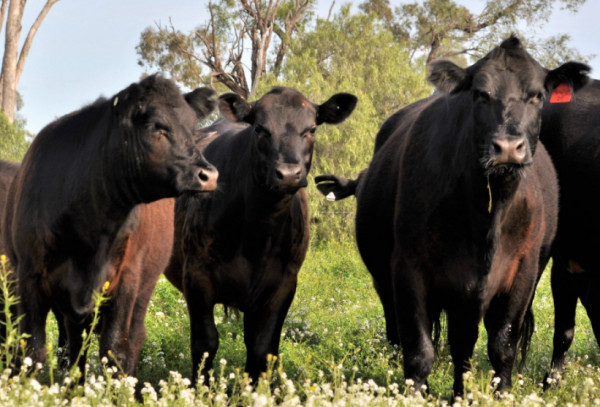
A new research report released by CSIRO and Meat & Livestock Australia (MLA) has shown the Australian red meat and livestock industry has reduced its net greenhouse gas emissions by 65 per cent since 2005.

Using information primarily from the 2020 Australian National Greenhouse Gas Inventory, the total greenhouse gas (GHG) emissions attributed to the red meat industry were 51.25Mt of carbon dioxide equivalent GHG in the year 2020.

This is a 6.4 per cent decrease compared to 2019 and a 65 per cent decrease compared to the baseline year of 2005. The red meat industry’s emissions represented 10.3 per cent of national total GHG emissions in 2020.

According to MLA’s managing director, Jason Strong, the reduction in red meat industry GHG emissions in 2020 was partly explained by reductions in livestock numbers following the years of drought leading into 2020.

“The number of livestock on the ground has an influence on industry’s overall emissions, and we know these numbers will fluctuate with seasonal and market conditions,” Mr Strong said.

“This highlights the importance of MLA’s investment in emissions reduction strategies to reduce enteric methane and other agricultural emissions along the value chain.

“Through an initiative called CN30 we are aiming to be carbon neutral by 2030, which is seeing us invest in innovation and technology that will help our industry to be carbon neutral while also maintaining productivity.

“The CN30 target is focused on achieving our goals through innovation, allowing us to maintain stock numbers while also delivering even greater environmental outcomes.

“We know that there will be variance year-to-year in industry emissions – but this report highlights that the overall trend is that the industry is decreasing its emissions.”

“Although it is important to note that reporting against the CN30 target accounts for ‘real’ biophysical change only attributed to the red meat sector and is unrelated to activities in the carbon market or with purchased offsets.”

The new research report examined the production of beef cattle, sheep for meat, and goats, as well as the domestic processing of these animals.

Emissions were attributed to the red meat industry based on animal numbers, feed intake, livestock processed, and resource use. It is part of the industry’s work in annually benchmarking its GHG footprint, which has been occurring since 2015.

The report highlighted areas for improvement such as including methods to estimate emissions that are currently excluded from the calculation. These include the transport of livestock and emissions associated with crop production for feed.

Mr Strong said MLA had developed a roadmap for CN30 that outlined four key areas for investment: emissions avoidance; carbon storage; leadership building; and integrated management systems.

“As we move closer to 2030, MLA and the red meat industry are ready to further reduce emissions and support producers in building a stronger, more sustainable future,” Mr Strong said.

The full report can be found at b.cch.2301-greenhouse-gas-footprint-of-the-australian-red-meat-production-and-processing-sectors-2020_.pdf (mla.com.au)
Digital Editions


  • Collection under the hammer

    Collection under the hammer

    AN eclectic curation of vintage and antique Australian pastoral machinery and memorabilia will go to auction on 1 February. Yvon Smythe and her late partner,…

More News

  • Calls flow for royal commission

    Calls flow for royal commission

    Purchase this photo from Pic Store: 524159 AUSTRALIA needs a royal commission into water management in 2026, according to Murray MP Helen Dalton, who says politicians are “destroying” the nation’s…

  • Big skies and farmscapes

    Big skies and farmscapes

    Purchase this photo from Pic Store: 524028 THE Gallery Balranald is currently showcasing the work of professional artist Graham Hearn. His latest exhibition, Big Skies and Farmscapes, reflects the vast scale and…

  • Difficult outlook for grape growers

    Difficult outlook for grape growers

    Murray Valley Winegrowers has acknowledged the findings of Wine Australia’s Australian Wine Production, Sales and Inventory Report 2025, which confirms the challenging market conditions facing growers. The newly released report…

  • Benham appointed to new ag role

    Benham appointed to new ag role

    The Nationals member for Mildura, Jade Benham, has been appointed Shadow Assistant Minister for Agriculture and Regional Development, as part of Jess Wilson’s new Shadow Cabinet announcement. Ms Benham said…

  • Connecting urban and rural Australia

    Connecting urban and rural Australia

    HAMISH McIntyre grew up on the land in Queensland, learning the rhythms of farming from his family. Today, he runs a sprawling family business across the St George, Dirranbandi, Quilpie,…

  • Farmers warned to stay alert

    Farmers warned to stay alert

    A RUN of booming haystack and shed fires across regional Victoria has sparked fresh warnings for farmers as hay season rolls into full swing. Fire crews in the west and…

  • Bumper harvest fuels Cobram Estate’s growth

    Bumper harvest fuels Cobram Estate’s growth

    COBRAM Estate Olives has reported one of its strongest years on record, with an exceptional “on-year’’ harvest in Australia driving improved earnings, higher production volumes and a confident outlook from…

  • Select Harvests’ cracking pace

    Select Harvests’ cracking pace

    SELECT Harvests Limited has released its 2025 business update, reporting a final almond crop estimate of 24,700 tonnes, slightly below the midpoint of its earlier forecast. The company says the…

  • Further water buybacks anger farming industry

    Further water buybacks anger farming industry

    FARMERS, politicians and advocacy bodies are warning further water buybacks announced last week will gut regional towns, drive up food prices and cripple Australia’s dairy heartland. Federal Water Minister Murray…

  • Farmer takes action in feral pig fight

    Farmer takes action in feral pig fight

    IN THE heart of south-western New South Wales, sheep and cattle farmer Colin McCrabb is waging a quiet war against a destructive and elusive enemy -feral pigs. Operating a 6800-hectare…