Andrew Mole
WHEN it comes to lateral thinking, farmers pretty well set the pace in Australian industry.
You can go way back to the stump jump plough and the innovation process from people on the land has never slowed down.
And circa 2022, Moulamein farmer Liz Kaylock is yet another one of those individuals who are handed a problem and it’s their job to find a solution – preferably by lunchtime so they aren’t getting nagged by dinner on how the job is going.
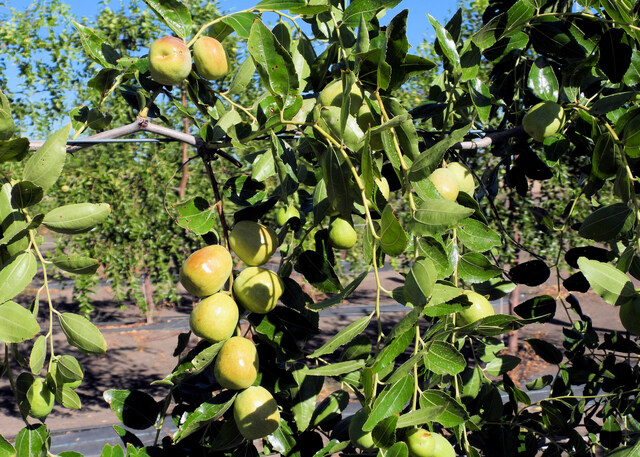
Based on a rice (when there’s water), sheep and cattle farm, the Kaylocks also had a small part of their land dedicated to a stone fruit orchard.
And her husband Peter, a little frustrated by the little prices, asked Liz what she could come up with to value add to the fruit.
Well talk about thinking on your feet – never mind lunch, Liz had the problem solved by morning smoko.
She was going to make fruit leather strips.
“I had actually been making them for our kids when they were at primary school,” Liz says.
“So I already had the dehydrator, and I knew rollups were not that successful for bags and drawers, so I decided to flatpack them,” Liz explains.
Well it seems to have worked wonders for IKEA, so why not for Liz’s newly-branded Fruitilizcious?
They had certainly proved a hit, not just with her children but with most of the local primary school kids whenever they could get their hands on them as well.
So she went into the flatpack fruit business, becoming a regular at the Swan Hill Farmers Market and spreading her wares to a few local shops and tourism outlets, such as Boo’s Cafe and Providore/Boo’s Lakeside (Swan Hill), The Modern Butcher (Swan Hill), The Deniliquin Information Centre, The Workshop Cafe (Gunbower), Mildura Farms and the Moulamein Art Gallery – as well as sites in places including Koondrook, Barham, Echuca and Hay.
And that handy husband of hers, who is/was a director of the Moulamein Grain Co-op, decided as she was ricocheting around the region delivering her fruit strips, she could double up and fill the boot of her car with Moulamein Oats boxes at the same time.
So with all that, and a thriving little online market developing, with assorted flavours flying around the country, as far afield as Queensland and the Northern Territory, it wasn’t going too badly for a little boutique business built on an orchard that no longer existed.
Well the fruit leather started eight years ago, but two years later, the Kaylocks finally agreed the orchard was more trouble than it was worth. So out came the trees and the whole value-add emphasis shifted onto the fruit leather.
And if you thought Liz was hands-on with the product before, it was now moving to a whole new level. Handpicking and hand harvesting her way around the neighbourhood.
Including having to find access to local growers to supplement what she had left in the home garden – a few blood plum trees and some mulberry.
But she was marketing much more than that.
“In our mixed flavours we have blood plum, apple/nectarine, pear strawberry, apple/peach, pear/boysenberry, pear/nectarine, pear/mulberry, apple/peach, pear/fig, apple/ginger and peach/pear,” Liz says.
“While the pure flavours we have are apricot, apricot and pear, nectarine and pear and nectarine and peach – as well as dried apple slices cinnamon dusted or dipped in orange juice.”
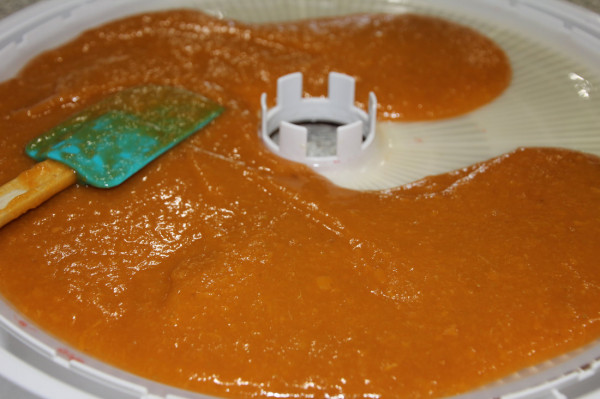
With all those play lunches under her belt, Liz wheeled out her handy dehydrator and set about puréeing her fruity concoctions and Fruitilizcious was up and running.
She says the jam market was already well and truly cornered by farmers with too much fruit, but fruit leather was an untouched niche on the local farmers market circuit.
“To work on the larger scale I had to do a bit of R&D to work out if the product was best done raw or cooked – and if cooked, how cooked?” Liz adds.
“In the end the best product was partly cooked, which preserved its moisture content, so it wasn’t too dry, and made the strap more flexible,” she says.
“But the key was ensuring the purée was a smooth as possible to avoid lumps when packing in the sealed cellophane bags, which give the fruit such a good shelf life. Even though I have a best-buy date on them, in most cases I reckon they would be good for another six months – although they may get a little darker in colour and a little tougher to eat.”
Liz says the cellophane wrap also lets people see what they are buying, especially as most of the fruit colours are enhanced by the drying process.
She also says the process maximises the intensity of some of the flavours, especially the mulberry (the ones she is now handpicking herself), which Liz describes as “spectacular”.
Outside her garden the older blood plums, which do almost as well, as increasingly hard to find – they also help make the finished product a little firmer.
“We don’t add any sugar or colouring and if something needs to be sweetened a little, I add in pear,” Liz explains.
“Not only does it sweeten the end product, it also helps give it a very appealing gloss,” she says.
“And when you work with something like the strawberries, which have a high water content, I tend to add in some apple to stabilise it and give it a bit more body.”
Recently, Liz has not been looking to expand, happy to service the outlets she currently has because, as she puts it, she is happy to dabble but there are plenty of other things to deal with on the family property.
“Things like the home orchard and fruit fly, where you basically have to throw surplus fruit away, I just can’t cope with that so it gets turned into fruit leather,” Liz says.
But there are bigger challenges farming the Riverina, not least is being in the irrigated farming when you don’t get any water – which happen more often than the Kaylocks care to think about.
When there’s no, or not enough, water there’s no rice crop, and it even puts pressure on livestock as well.
Right now the family is boosting its sheep numbers to around 3000 head or more, which are a Merino base but there is also a crossbred component for burgeoning meat market, and they have been buying in cows to produce steer calves for the equally booming beef market.
“The thing which really gets me is the cost of water. Not necessarily the water you get, but the price you are forced to pay for water you never see,” Liz says.
“We’re part of MIL (Murray Irrigation Limited is Australia’s largest environmental and irrigation water supplier) and all the costs, from water itself to licences, meters, compliance, the list just goes on – and we pay for it,” she says.
“Even during the drought, when we didn’t get any water, we paid.
“Over the years we have done a lot of work to minimise the water we need and use on-farm – which we paid for – but no matter what happens, it is the farmers who get slugged.”
Fortunately, Liz conceded, her fruit leather business is in the dehydration, as opposed to hydration, business.