There’s pests and then there’s insects

HEALTHY populations of beneficial insect can suppress pests.

Despite grain growers being keen to preserve these natural helpers, integrated pest management programs have been challenging, because there was no integrated, scientifically-proven guide explaining the impact commonly used insecticides have on beneficials.

Now as part of the Australian Grains Pest Innovation Program, an investment by the Grains Research and Development Corporation in partnership with Cesar Australia and the University of Melbourne, there is a guide for growers, agronomists and farm advisers in the Beneficials Chemical Toxicity Table.

Developed in consultation with grain growers and chemical industry representatives, the table summarises the impacts of various insecticidal and miticidal active ingredients on a range of beneficial insects, such as ladybird beetles, parasitoid wasps, predatory mites, lacewings and hoverflies.

The research focused on chemicals, field rates, growing environments, pests and beneficials specific to the grains industry, and this was the first time that such a guide had been developed for Australian broadacre cropping.

Since its initial publication in April 2022, this guide has been instrumental in helping growers make informed management decisions.

South Australian agronomist Hamish Verco said the toxicity guide had become a valuable reference tool in the field.

“I work in the organic/biological space, so my recommendations are often to avoid insecticides all together, but this is not always possible,” Mr Verco said.

“So, where growers must, it is great to empower them with knowledge on what products they can use that may have less effects on beneficials.”

The data collected on beneficial insects covers a wide range of species, which are presented in a consolidated grouped form in the table.

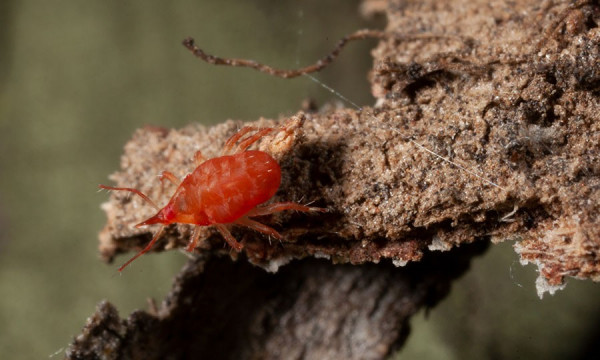
For example, recent findings on snout mites, which are important predators of the red-legged earth mite and lucerne flea, are now incorporated into the “predatory mites” category.

Overall toxicity ratings for each chemical have been determined by averaging the results across all insect species included.

Chemicals are arranged in ascending order of overall toxicity – the least toxic chemicals begin at the top of the table and progress downward toward the more toxic chemicals.

By utilising the Beneficials Chemical Toxicity Table, growers can make targeted spray decisions that minimise harm to essential beneficial insects and maximise biological control against a specific pest.

For instance, if a grower struggling with aphids has observed the presence of parasitoid wasps in their fields, they can opt for an insecticide that exhibits low toxicity towards the parasitoids.

Even if a grower doesn’t know which beneficials are present in their fields, the table can still be used to identify which pesticides have the lowest overall toxicity across all beneficial species, with a focus on hardy generalist predators such as rove beetles.

Check out the toxicity table at cesaraustralia.com/resources/beneficials-toxicity-table/.
Digital Editions


  • Collection under the hammer

    Collection under the hammer

    AN eclectic curation of vintage and antique Australian pastoral machinery and memorabilia will go to auction on 1 February. Yvon Smythe and her late partner,…

More News

  • Calls flow for royal commission

    Calls flow for royal commission

    Purchase this photo from Pic Store: 524159 AUSTRALIA needs a royal commission into water management in 2026, according to Murray MP Helen Dalton, who says politicians are “destroying” the nation’s…

  • Big skies and farmscapes

    Big skies and farmscapes

    Purchase this photo from Pic Store: 524028 THE Gallery Balranald is currently showcasing the work of professional artist Graham Hearn. His latest exhibition, Big Skies and Farmscapes, reflects the vast scale and…

  • Difficult outlook for grape growers

    Difficult outlook for grape growers

    Murray Valley Winegrowers has acknowledged the findings of Wine Australia’s Australian Wine Production, Sales and Inventory Report 2025, which confirms the challenging market conditions facing growers. The newly released report…

  • Benham appointed to new ag role

    Benham appointed to new ag role

    The Nationals member for Mildura, Jade Benham, has been appointed Shadow Assistant Minister for Agriculture and Regional Development, as part of Jess Wilson’s new Shadow Cabinet announcement. Ms Benham said…

  • Connecting urban and rural Australia

    Connecting urban and rural Australia

    HAMISH McIntyre grew up on the land in Queensland, learning the rhythms of farming from his family. Today, he runs a sprawling family business across the St George, Dirranbandi, Quilpie,…

  • Farmers warned to stay alert

    Farmers warned to stay alert

    A RUN of booming haystack and shed fires across regional Victoria has sparked fresh warnings for farmers as hay season rolls into full swing. Fire crews in the west and…

  • Bumper harvest fuels Cobram Estate’s growth

    Bumper harvest fuels Cobram Estate’s growth

    COBRAM Estate Olives has reported one of its strongest years on record, with an exceptional “on-year’’ harvest in Australia driving improved earnings, higher production volumes and a confident outlook from…

  • Select Harvests’ cracking pace

    Select Harvests’ cracking pace

    SELECT Harvests Limited has released its 2025 business update, reporting a final almond crop estimate of 24,700 tonnes, slightly below the midpoint of its earlier forecast. The company says the…

  • Further water buybacks anger farming industry

    Further water buybacks anger farming industry

    FARMERS, politicians and advocacy bodies are warning further water buybacks announced last week will gut regional towns, drive up food prices and cripple Australia’s dairy heartland. Federal Water Minister Murray…

  • Farmer takes action in feral pig fight

    Farmer takes action in feral pig fight

    IN THE heart of south-western New South Wales, sheep and cattle farmer Colin McCrabb is waging a quiet war against a destructive and elusive enemy -feral pigs. Operating a 6800-hectare…