GROWERS across north-west Victoria know early sowing has shown to significantly increase yields.
Successful early sowing usually relies on an initial rainfall event for optimised germination and establishment.
However, this seasonal break is becoming less predictable, and can be followed by weeks of dry weather.
With an increase in summer rainfall across the Australian wheatbelt, soils have potential to retain subsurface moisture deeper than 50mm from summer rain events, allowing for earlier moisture availability at depth during the sowing window, and prior to the season break.
Birchip Cropping Group project lead researcher Brooke Bennett said this was where long coleoptile varieties and deeper sowing methods came in.
“This allows growers to sow and establish a crop prior to the season break, potentially extending the length of the growing season and offering yield benefits,” Ms Bennett said.
She said these practices were particularly important in drier or drought conditions, where a dry surface soil would otherwise delay or limit sowing altogether.
“Moisture seeking is not the only fit that long coleoptile wheats have in a farming system,” she said.
“Other scenarios that could potentially benefit from these genetic traits are where furrow in-fill is likely to occur between sowing and emergence as a result of wind events, as well as areas where significant soil amelioration practices have occurred and it is more difficult to control seed placement at sowing (such as deep ripping or delving).
“Research is also looking to identify the function of these varieties in managing herbicide separation from seed, and impacts on root or crown diseases.”
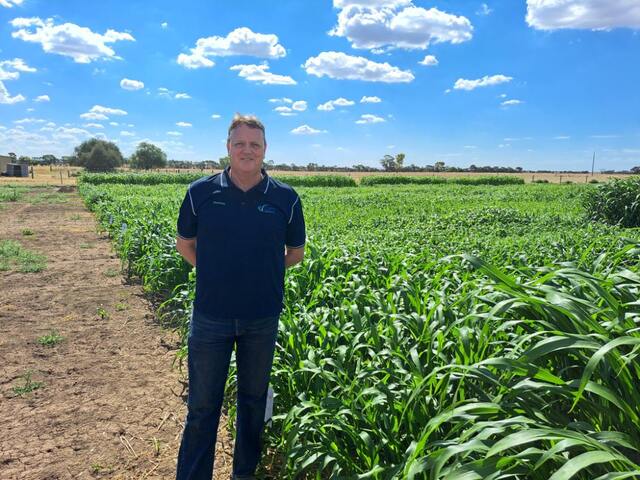
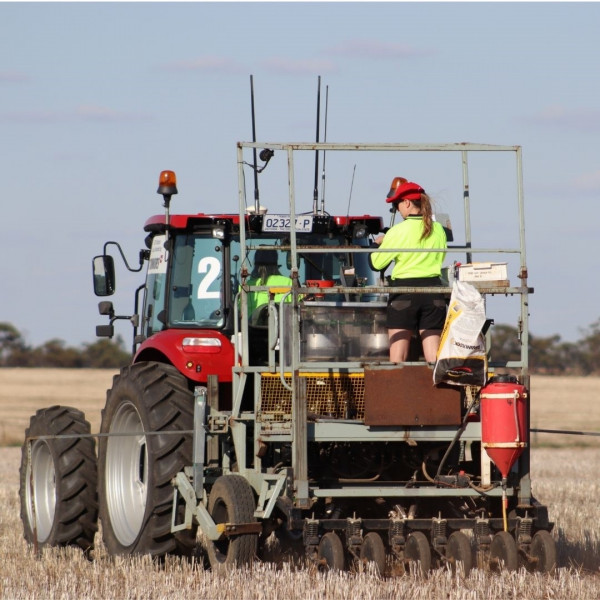
To explore these opportunities, BCG, in collaboration with CSIRO, implemented a one-year trial at the Kinnabulla main site, comparing nine different wheat varieties at a depth of 30 to 50mm and 100 to 120mm.
The varieties included Calibre, LRPB Bale, LRPB Dual, Mace18, Valiant CL Plus, Yitpi, Mace, Magenta, Cutlass, and Scepter as a control. Morava (vetch) and PBA Hallmark XT (lentil) were also trialled, given their popularity amongst growers in the region.
“Pulses such as lentils and vetch can be sown at depth and emerge well, so a small trial was also established at Kinnabulla to demonstrate to growers a pulse crop’s ability to be sown deep for access soil moisture,” Ms Bennett said.
“Similar work is being delivered in a further five locations across the southern and western grain growing regions, and will provide a good overview on the fit of long coleoptile varieties, as well as key opportunities and challenges.”
Key messages
FOR growers to better understand this genetic wheat trait, below are some key messages on long coleoptile function and management:
What is the coleoptile?
The coleoptile is the protective sheath that encases the first leaf or shoot and increases its ability to push through the soil, at which point, the first leaf unfurls and begins to function.
What factors influence coleoptile length?
Genetics, temperature, seed size and quality all influence coleoptile length. Over time, varieties desired by growers have innately shorter coleoptiles. However, research suggests that this can be adjusted by selecting for the right genes, and that coleoptile length can be longer in currently commercially accepted varieties. This research continues.
Temperature is a key driver to coleoptile length. Growers are aware of potential yield benefits when sowing early, but this practice can be challenging at an increased depth, as warmer conditions can lead to a shortened coleoptile. It is suggested that longer coleoptiles would alleviate this issue.
As with some other attributes associated with establishment, coleoptile length is also influenced by grain quality. Larger, plumper grain will result in increases in coleoptile length, but is of a smaller influence than genetics and temperature.
If I grow a long coleoptile variety, do I have to sow it deep?
The answer is no. The coleoptile is also light sensitive, so you can sow a long coleoptile variety at a shallower depth when conditions allow. Once the coleoptile reaches the surface, it will open up to let the first leaf through. These varieties are not locked into deep sowing.
Does soil type have an influence?
Potentially, but for reasons not exclusive to a long coleoptile. Heavier soils, or soils with constraints (sodicity or hard setting) can generally be more difficult to establish crops in. While long coleoptiles can offer some opportunities, there is still a need for the seeding equipment to be able to effectively place the seed in the ground and leave a suitable seedbed. This is an area of research still being developed and may emerge from some of the trial that were placed on heavier soils this season.
Ms Bennett said BCG was currently processing harvest results from this trial, which she said would presented at BCG’s Trials Review Day. They will also be made available via the BCG season research results compendium, which will be distributed to members early next year.