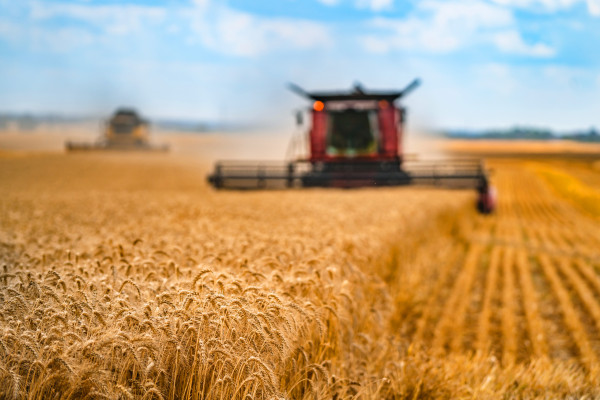
Aligning chemical regulation with international grain markets

GRAINGROWERS Limited says if you ever want to see the chaos caused by the smallest of numbers, consider the impact of maximum residue limits (MRL) for agricultural chemicals.

The peak farming body says with differing regulatory frameworks and approaches to risk assessment across the global trading environment, the failure to ‘get it right’ has serious consequences for ongoing trade.

Its chief executive Shona Gawel says to ensure the safety of people and the environment, all agricultural chemicals registered for use in Australia are independently and scientifically assessed by the Australian Pesticides and Veterinary Medicine Authority (APVMA).

Ms Gawel said APVMA established a MRL for every agricultural chemical, setting the highest level of chemical residue legally allowed in food products produced in Australia.

She said MRLs were set at levels unlikely to pose a risk to human health and not likely to be exceeded when the chemical was used in accordance with label directions.

“It is important to note MRLs can vary between different markets due to different regulatory frameworks and risk assessments,” Ms Gawel said.

“Australia’s approach is based on a comprehensive risk assessment which considers exposure, scientific studies, data, and proposed usage.

“In contrast, the European Union (EU) employs a hazard-based approach, focusing on intrinsic properties of substances.”

In international markets, ensuring compliance with varying MRLs is crucial.

For instance, when exporting grain it’s imperative to adhere to the regulated MRLs and customer contract specifications, which might differ from Australia’s standards.

In some instances, even the proper application of chemicals in accordance with Australian label directions can result in grain residues that fail to meet the requirements of stringent export markets.

The reduction of the haloxyfop MRL in the EU announced earlier this year is an example of why Australia needs to be proactive in understanding changes to MRLs in markets and the increasing sensitivity of markets to chemical residues.

In 2021-22, Australia’s national residue survey (NRS) program showed:

* 832 samples from domestic supply (99.4 per cent compliance)

* 1580 samples from export containers (98.9 per cent compliance)

* 4156 grain samples from bulk exports (a 99.9 per cent compliance rate).

Residues in domestic and export grain shipments are monitored by marketers and/or the NRS.

The NRS program covers a range of domestic and export commodities, including grain, and is funded by a levy.

Ms Gawel said the NRS program facilitated and encouraged ongoing access to markets by verifying good practice and alignment with chemical control of-use legislation and guidelines.

The NRS program includes 23 grain commodities.

Sampling is developed in consultation with the industries involved and takes into account importing country requirements.

The high degree of compliance helps to maintain the reputation of Australian grain.
Digital Editions


  • Collection under the hammer

    Collection under the hammer

    AN eclectic curation of vintage and antique Australian pastoral machinery and memorabilia will go to auction on 1 February. Yvon Smythe and her late partner,…

More News

  • Calls flow for royal commission

    Calls flow for royal commission

    Purchase this photo from Pic Store: 524159 AUSTRALIA needs a royal commission into water management in 2026, according to Murray MP Helen Dalton, who says politicians are “destroying” the nation’s…

  • Big skies and farmscapes

    Big skies and farmscapes

    Purchase this photo from Pic Store: 524028 THE Gallery Balranald is currently showcasing the work of professional artist Graham Hearn. His latest exhibition, Big Skies and Farmscapes, reflects the vast scale and…

  • Difficult outlook for grape growers

    Difficult outlook for grape growers

    Murray Valley Winegrowers has acknowledged the findings of Wine Australia’s Australian Wine Production, Sales and Inventory Report 2025, which confirms the challenging market conditions facing growers. The newly released report…

  • Benham appointed to new ag role

    Benham appointed to new ag role

    The Nationals member for Mildura, Jade Benham, has been appointed Shadow Assistant Minister for Agriculture and Regional Development, as part of Jess Wilson’s new Shadow Cabinet announcement. Ms Benham said…

  • Connecting urban and rural Australia

    Connecting urban and rural Australia

    HAMISH McIntyre grew up on the land in Queensland, learning the rhythms of farming from his family. Today, he runs a sprawling family business across the St George, Dirranbandi, Quilpie,…

  • Farmers warned to stay alert

    Farmers warned to stay alert

    A RUN of booming haystack and shed fires across regional Victoria has sparked fresh warnings for farmers as hay season rolls into full swing. Fire crews in the west and…

  • Bumper harvest fuels Cobram Estate’s growth

    Bumper harvest fuels Cobram Estate’s growth

    COBRAM Estate Olives has reported one of its strongest years on record, with an exceptional “on-year’’ harvest in Australia driving improved earnings, higher production volumes and a confident outlook from…

  • Select Harvests’ cracking pace

    Select Harvests’ cracking pace

    SELECT Harvests Limited has released its 2025 business update, reporting a final almond crop estimate of 24,700 tonnes, slightly below the midpoint of its earlier forecast. The company says the…

  • Further water buybacks anger farming industry

    Further water buybacks anger farming industry

    FARMERS, politicians and advocacy bodies are warning further water buybacks announced last week will gut regional towns, drive up food prices and cripple Australia’s dairy heartland. Federal Water Minister Murray…

  • Farmer takes action in feral pig fight

    Farmer takes action in feral pig fight

    IN THE heart of south-western New South Wales, sheep and cattle farmer Colin McCrabb is waging a quiet war against a destructive and elusive enemy -feral pigs. Operating a 6800-hectare…