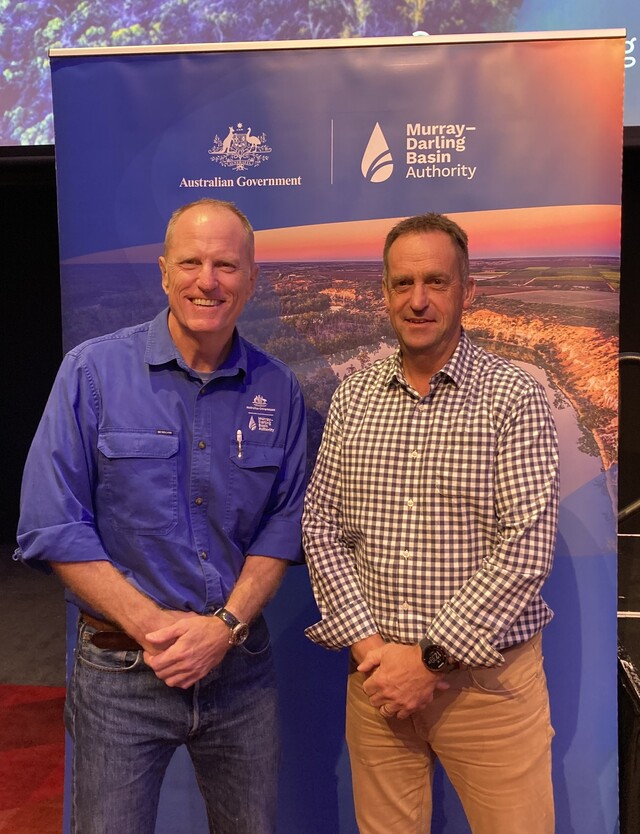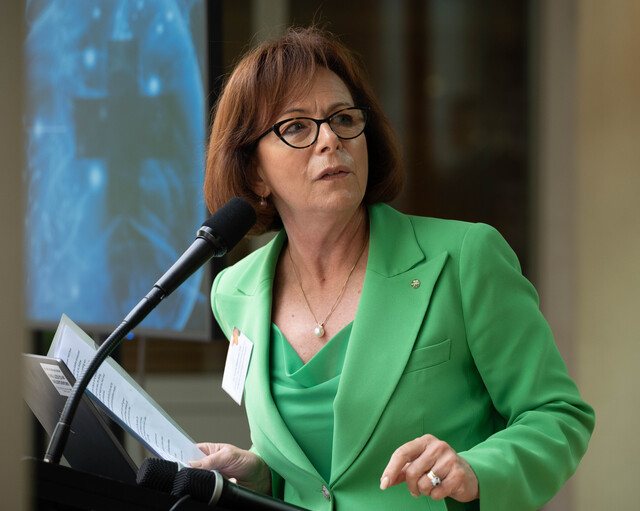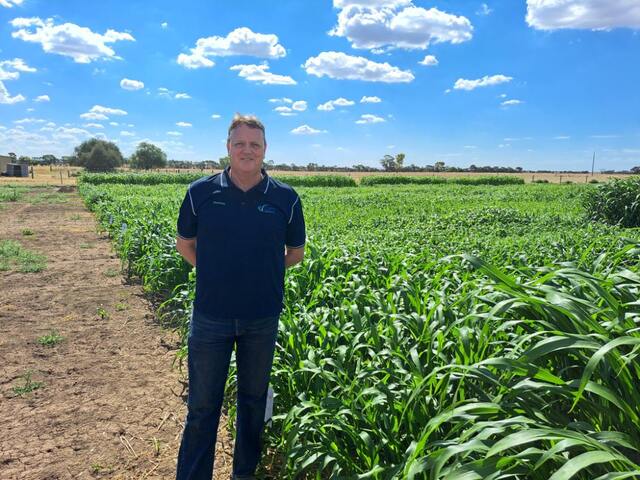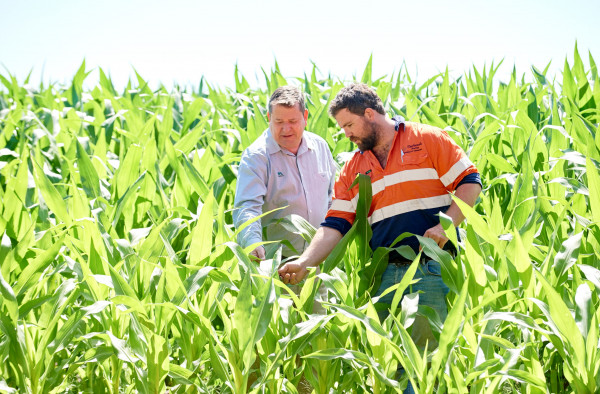
Nufarm chief executive GREG HUNT talks to North West Farmer about the challenges and opportunities on the horizon for Australian cropping. He says Nufarm is the only global crop protection brand with significant manufacturing assets in Australia and its commitment to being a partner for growth includes focusing on the company’s Australian heritage.
MORE than $20 billion of Australian agricultural output – 73 per cent of the total value of Australian crop production – can be directly connected to chemical crop-protection products.
A Deloitte Access Economics report says those crop protection products increase crop yields by about 40 per cent and allow farmers to produce safe, high-quality, affordable and abundant food and fibre that is competitive on world markets.
Without access to these tools, Australian farmers face losses of up to 80 per cent of their crop.
Crop protection products eliminate pests, weeds and diseases that damage crops, reduce yields and compromise food safety and are a critical input for Australian farmers as they are the most effective tools for protecting crops and allowing farmers to remain environmentally sustainable by producing more food on less land.
And Nufarm chief executive Greg Hunt has told North West Farmer reliable access to critical inputs such as crop chemicals is essential to Australia’s food security, competitiveness in international markets and agricultural sector growth objectives.
Mr Hunt says Australia’s growing reliance on imported crop-protection products, particularly from China, is leaving our agricultural sector and food security increasingly vulnerable to international supply chain challenges and unfair trade practices.
“This trend has resulted in Australia’s domestic crop-protection manufacturing and formulation capacity shrinking and is now a sovereign manufacturing risk,” Mr Hunt says.
“We are pleased the Australian Government is listening to our concerns and understands the importance of local crop protection manufacturing to food security and the agriculture sector’s resilience.
“Despite all the challenges faced by Australian agriculture – historically and recently through fires, COVID and flooding – we remain one of the world’s few net producers.
“In Nufarm’s opinion, Australia, despite all the odds, and all the global forces arrayed against it, remains one of the few nations which can genuinely help feed the world.”
And his company is working overtime to reverse the trend, through global investments in not just its cropping products as its core business, but expanding into bioenergy and plant-based sources of omega-3 for aquaculture and human nutrition.
But one of the most ambitious of all its goals, through Nuseed, its wholly owned seeds division, is to connect farming with the bioenergy industry – to literally drive the future.
Mr Hunt says Nuseed’s Carinata product is an independently certified, sustainable, non-food cover crop contract grown between main crop rotations to regenerate soil and is then harvested for certified sustainable lower-carbon feedstock.
He says it reduces emissions when its oil is used to replace fossil fuels and removes atmospheric carbon while restoring soil carbon as it grows.
Nuseed Carinata does not require additional farmland, and financially rewards sustainable farming practices, helping maximise greenhouse gas reduction.
Traceable from paddock to pump through comprehensive production data, Nuseed Carinata is independently certified by the Roundtable on Sustainable Biomaterials under its principles and criteria, which recognise Nuseed Carinata as best in class in addressing key sustainability issues.
“In less than a year since the signing of Nuseed’s strategic offtake and market development agreement with fuel giant BP, the first shipment of Carinata left Argentina – where it was contract grown in Argentina and Uruguay,” Mr Hunt says.
“After arriving in France it will undergo proprietary processing by Saipol (a European leader in oilseeds processing of vegetable oils and derivatives, oil-rich meals, and low carbon renewable energies) with the resulting certified Nuseed Carinata oil to be delivered to BP.
“Nuseed Carinata is being scaled globally with commercial seed production already expanding in South America and the Southern US, with development programs under way in Australia and Europe.”
Mr Hunt describes its rapidly emerging role in transforming transport as “bigger than blue sky”.
He says the push to net zero is only going to speed up, and the solutions need to be in place.
“Decarbonising transportation, such as aviation, is a significant challenge and we are excited by the potential that lower carbon feedstocks can play in helping transform that sector.
“Meeting growing demand for sustainable aviation fuel requires a reliable and renewable supply of feedstocks, and our partnership with bp is an important step in that direction and an incredibly exciting prospect for farmers.”
Mr Hunt also flagged Nufarm’s recent announcement of a strategic alliance with Brazilian company GranBio to accelerate the development and expansion of energy cane.
“This is a fundamental step change in energy creation and renewable product generation from cane. The expansion of energy cane as a reliable feedstock into emerging second-generation process technology will make it possible to help decarbonise hydrocarbons for applications such as biochemicals and sustainable aviation fuel.”
Mr Hunt also pointed to other areas across agriculture – and now aquaculture – where Nufarm is looking for the innovative ideas needed to bridge the growing gap between supply and demand.
Which is why, he says, Nufarm is setting up new enterprises to give Australia a strong position in protecting its own future in the global space.
And why he is still calling on Canberra to step up to protect an industry on its way to having a $100 billion bottom line – or it might never get there.