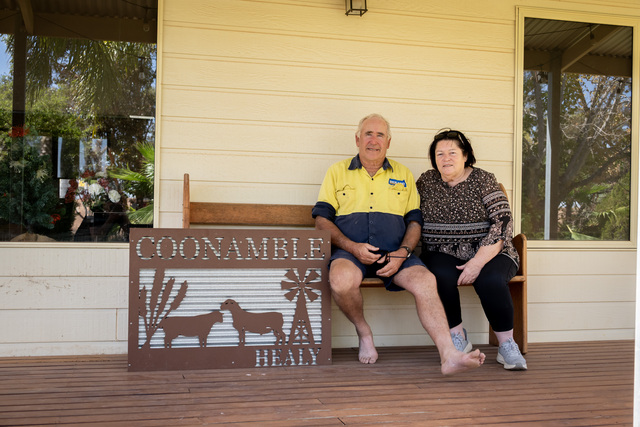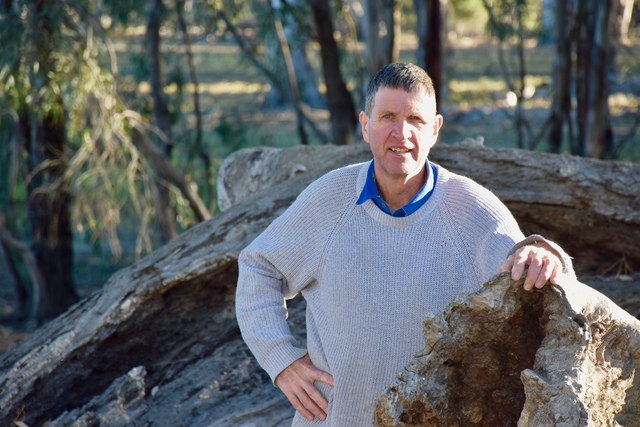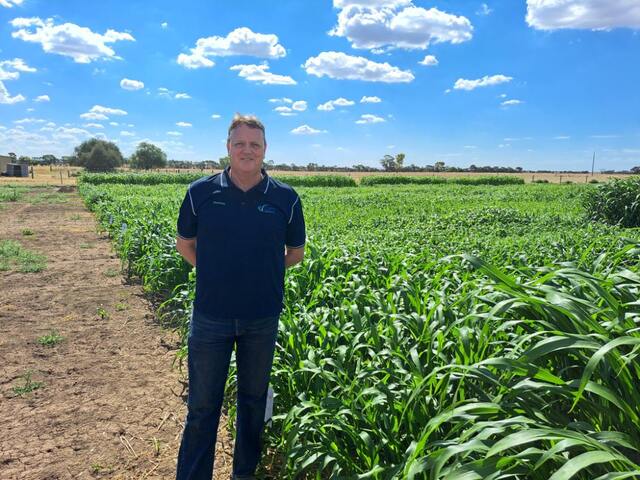
Just like his pioneering farming family, Merbein’s Neal Bennett has no hesitation taking on daunting projects beyond his own property. ANDREW MOLE reports MERBEIN almond grower Neale Bennett’s great grandfather might struggle to find his bearings on the family farm today.
What it’s growing, how many farms there are, the houses, the roads, the flushing toilets and nary a bullock dray in sight.
When he and his brothers decided to take up a block in the Sunraysia, it wasn’t just something of a midlife crisis, it was a journey so convoluted and confronting it’s incredible they even reached the Murray.
Melbourne-based plasterers by trade, the boys had missed the first allocation of land in the district, so soon after the turn of the 20th century (in 1910 to be exact, and long before anyone thought of soldier settlement), when a second round was announced, they couldn’t resist it.
However, Neale says getting the land was one thing, getting there proved a different challenge altogether.
“These were the days when the men were men and the womenfolk and children were left behind until land was cleared, some sort of home was built and crops could be planted,” he explained.
“But once my family had the land title, they needed the money to get to Merbein, to keep them going while the land was cleared and some infrastructure put in place, so instead of heading north to the Murray, they went west to Casterton, near the SA border in the depths of the state’s western districts.
“They had got a contract there to do all the pavements in the town and that was going to be their cash for the trip to Merbein and whatever their future held.”
From there, in true pioneer style, the dray was loaded and the walk north began – day after day.
But Neale says it was only after they arrived that the seriously hard work began.
He says their block came with every available native grass, bush and tree and they all had to go. Water had to be secured, swags and tents replaced by homes with some air of permanence and crops planted.
Try getting someone to tackle all that today – just to get a start.
“But once they had got that far, they were able to send for their families, who had been left in town all this time, and when they arrived, the focus was on infrastructure,” Neale said.
“And they were still relying on off-farm work – at one point, that even included building a local church.
“The one thing of which there was no shortage around here was limestone and not only did that lay a big role in construction – but because they were plasterers by trade, they soon set up a lime-burning operation, which had a double bonus.”
When you burn limestone, which is basically calcium carbonate, you end up with quick lime (or calcium oxide).
When mixed with water, this produces slaked lime, calcium hydroxide. When slaked lime or quick lime was added to the land, it raised its pH and so improved its fertility. Slaked lime was also used as lime putty for building.
“Eventually, the homestead got finished and it is still standing there, with some of my cousins owning the land,” he added.
“Then as if one generation of pioneers wasn’t enough, my grandfather decided he would strike out on his own so he, literally, went across the road and took up his own land.
“Which came with every available native grass, bush and tree and they all had to go. And they did go, but we are still here.”
Neale’s grandfather cleared two 21-acre blocks and that remains – by and large – the farm Neale runs today with his wife, Debbie.
Where he reckons he is on target to finish this year’s harvest by Easter.
On the surface, that might not sound the world’s biggest achievement, since 42 acres is hardly daunting when you are equipped for mechanical harvesting.
But this is the point where Neale also concedes he is something of am impulse farmer, which he has regretted more than once.
In 1992, he was facing yet another series of challenges in the dried fruits industry, in which he and his family had been engaged since circa 1910.
So pulling right out of the family history to do what he believed would be the best decision for his and his family’s future, generated a fair bit of comment – and amusement – amongst neighbours and peers at the time.
“At times it was a bit like being in that old TV show Greenacres, where the city executive moves to the country and buys a farm and bumbles along from season to season,” Neale said.
“This had been grape country for a long time but things were getting challenging, and things were happening which pushed us towards change.
“I was already thinking about diversifying, the dried fruit market had been deregulated; labour costs were soaring and plenty of our plantings had passed their use-by date.
“We could see the emergence of almonds as an opportunity, you could machine harvest, there was a lot of investment coming into the industry, it seemed a good decision to make.”
A decision which today sees almost 4000 trees across the Bennett family’s two blocks, and in a normal year that would deliver somewhere between 42 and 45 tonnes.
But there was no stopping Neale now – his impulse urges were going into overdrive.
He says there were a few small almond growers like him so they initially got together to help each other and then came up with the bright idea of getting more machinery and going into contract harvesting.
As if he had nothing else to do.
“In 2014, we were approached by a corporate grower and on the back of a five-year contract, and in a rush of blood, said we would be in it,” Neale added, shaking his head.
So when Neale says he hopes to have harvest finished by Easter, he means his 42-odd acres plus another 2400-plus acres.
By Easter. That’s two weeks away.
But as big a headache as it has been from time to time, Neale says they have been very lucky because they have been able to hang onto about 75-80 per cent of their original workforce.
“Labour is always the trick and to have this team stick together is great and does make things a lot easier to manage than my impulses may have initially allowed,” he said.
He is also encouraged by the current harvest, a big step back to normality after the disaster of the previous season.
A normal year on the Bennett blocks yields around 42-45 tonnes of (mostly) Nonpareil almonds but last year that was just 36 tonnes.
Which is why Neale also believes Select Harvests copped a bit of harsh publicity, with its $115 million loss being plastered all over the media and wider world.
He says it wasn’t just almonds, right across horticulture it had been a very tough year.
“It was a year which had been way too wet, and too cold,” Neale added.
“Like most irrigators, we do our fertigation through the drippers and they weren’t running anywhere near normal levels because of all the rain so we were already underdone for nutrients,” he says.
“Then all that cooler weather hardly helped the nutrients that were delivered synthesise, so we ended up with a lot of flatter almonds.
“Even worse, the varroa mite incursion stopped movement of hives across the Victoria/NSW border and that further reduced productivity so all of us, from Select Harvests to small production units such as ours, were hit hard by those conditions.
“But now things look a lot better, it’s not wet, yields seem OK and there are fewer problems, so it’s a matter of putting that bad harvest in the rearview mirror and focusing on rebuilding.”
Neale says the previous harvest has also made sure everyone is going as fast as they can to get this one off the trees while weather conditions remain good.
The production target is to deliver processors – in his case Almondco in South Australia’s Riverland – a crop with a 5 per cent moisture level in the kernel. That is the optimum level as the moisture impacts the quality of the final product and the 5 per cent gives you “the crunch” in your almond.
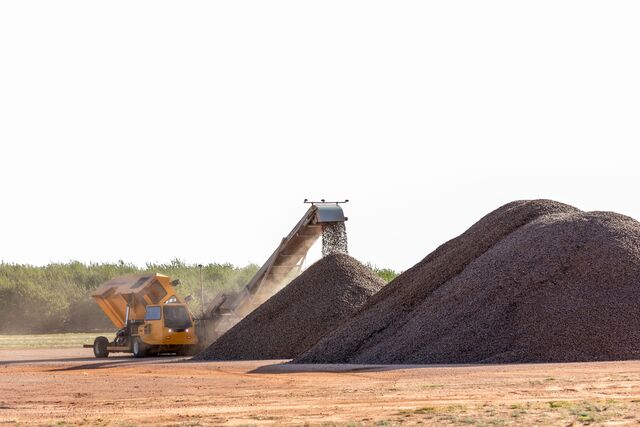
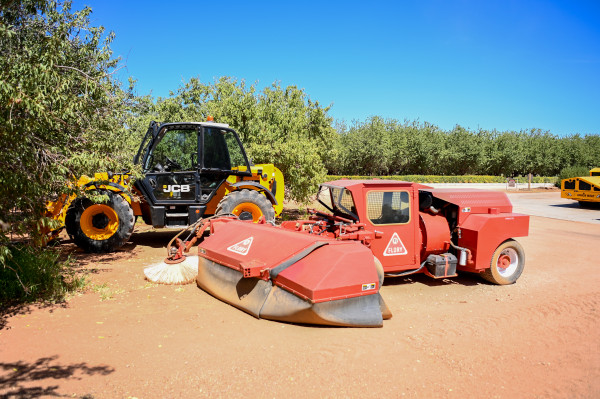
Neale’s kernels are air dried with the process starting with shakers at the trees, windrowing and then the conditioner is used to constantly turn over the kernels, clean out the twigs and leaves and prepare the crop for processing.
“We grow mostly Nonpareil, using Price and Carmel as our pollinators – but we have put in a trial patch of Shasta, a new self-fertile variety from California. It went in last year and we should start seeing some results in the next two or three years.”
The pollinators are also used for value-adding in products such as the slivered, flake or almond meal market.
Speaking of the next two or three years, Neale is also one of the driving forces behind a Whole Orchard Recycling project being run on a few of his acres in partnership with the South Australian Research and Development Institute exploring ways to save water, boost productivity, and enhance carbon sequestration as a viable alternative to the traditional burning of trees past their use-by dates and being removed for replacement.
All good results that might help protect his business from the ongoing varroa management challenges, the market fluctuations and all the rest – and then everything will be fine.
Until the next problem emerges.
And it will, Neale concedes. Or it just wouldn’t be farming.