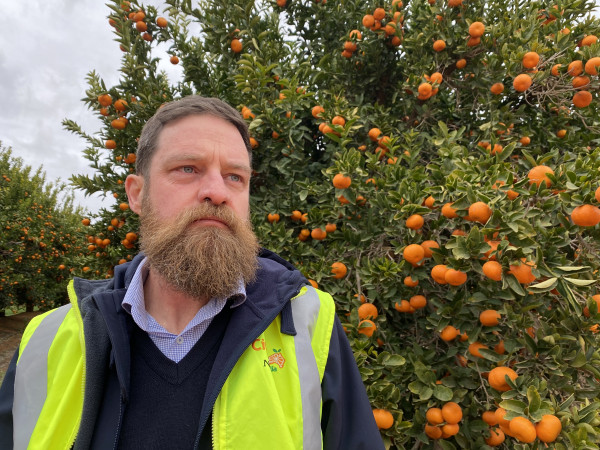
Mr Hancock said the Federal Water Minister Tanya Plibersek lifted the embargo on water purchases by the Federal Government, paving the way for the reimplementation of water buybacks from the agriculture sector.
He said the move could have a significant impact on horticulture industries and rural communities located across the basin.
“Minister Plibersek is quoted as saying she doesn’t need permission of states and territories to initiate buybacks, and that may be the case, but I think her statement lacks any awareness of the impacts further buybacks will have on families connected with primary industry, who rely on the river for their survival, and thus that of their towns and communities,” Mr Hancock said.
“Buybacks will only put more pressure on the people out here growing Australia’s food at a time when they’re still reeling from disrupted supply chains, caused by a global pandemic and the war in Ukraine.
“These issues have driven up input costs on one side, while the cost-of-living crisis has held down prices paid to growers on the other side.
“A lot has been achieved over the course of the Murray-Darling Basin Plan, but much of the pain has been borne by farming communities.
“State governments were tasked with delivering projects that resulted in 450GL water savings and should be held to account here.”
An independent assessment published in 2020 recommended governments put communities at the centre of all matters concerning the Basin Plan’s future.
“We support the minister’s decision to extend the timeframe for achieving the plan; it’s within her power to give states time to meet their responsibilities,” Mr Hancock said.
“However, turning to buybacks is just a quick fix to meet election commitments.
“It is shortsighted and ignores the fact basin communities will be worse off in the long run.”
Ms Plibersek told the ABC she has “been very clear all the way along that voluntary water purchase will have to be a part of achieving the objectives under the plan”.
“Of course we will look at water saving projects, water efficiency projects, easing constraints on the flow of the river, looking at rules changes, but voluntary water purchase inevitably will be part of the solution in coming years,” she said.