THIS month, Josh Fanning started seeing all the wrong things, way too soon, in pulse crops around the Mallee and Wimmera – especially botrytis.
Dr Fanning, the Agriculture Victoria plant pathology research leader, can’t recall when he last saw diseases in pulse crops this early in the season.
And it’s not just botrytis grey mould, which he describes as “an aggressive disease”.
He says ascochyta has also been detected alarmingly early, and is already severe in some districts, with stem breakage and leaf infection.
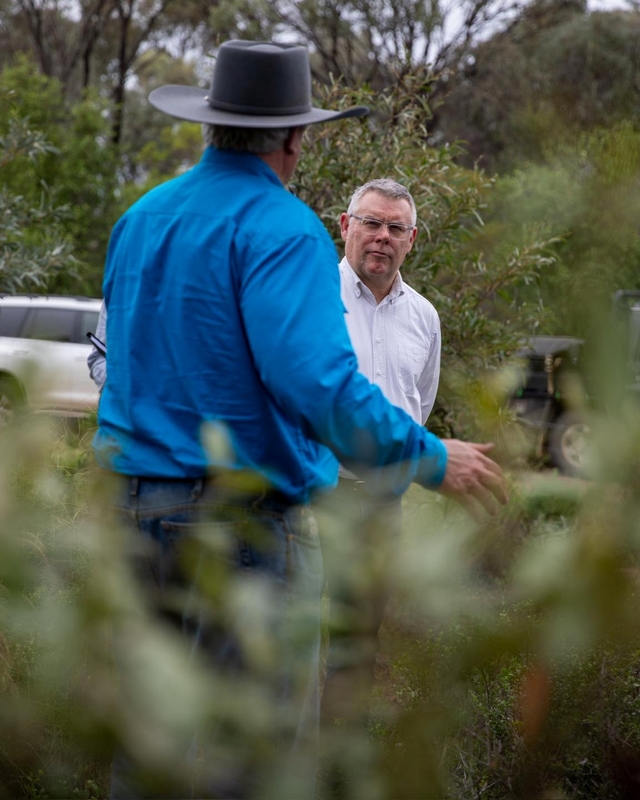
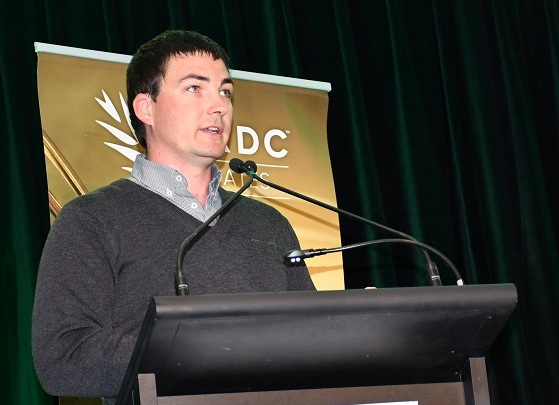
Speaking to North West Farmer after presenting a GRDC grower update at Minyip, Dr Fanning said control measures were needed now.
“When you have challenges this early in the season, there are a number of factors you can consider in your management, starting with your risk profile, with things such as avoiding a tight rotation of lentils in the same, or neighbouring paddocks, and using treated seed which has been tested for infection,” Dr Fanning says.
“Some of the non-resistant varieties are excellent ones to use, provided you make sure you have made the right decisions before seeding.
“Normally you would not be overly concerned, but with all the rain we have had in many parts of the Mallee and Wimmera this year, leaves have been wet for six weeks.
“Which is why, especially in years such as 2022 and this year, you are much better off with treated seed and a two-year break with lentils in the same, or nearby paddocks.”
Dr Fanning says he would not expect to see conditions such as the current ones at this time of the year in this part of Victoria – it would be expected, for example, on South Australia’s Yorke Peninsula.
But he says there are hotspots in areas such as Quambatook, Beulah and up to Swan Hill.
“You need to get out in those paddocks now and have a good look at what is happening, because this can be controlled with fungicides,” Dr Fanning says.
“A couple of dry weeks now will get us to canopy closing and while a normal Mallee year here would be one to two fungicides this year may be a minimum of two, and maybe three depending on how we finish.
“The full soil moisture profile in many areas is a big help, which should give a good grain yield even with the outlook for a dry spring, but I cannot over-emphasise growers need to check their crops now – and work closely with their advisers.”
Dr Fanning says the roll-up of growers has been strong at updates across the region, with more than 60 at Minyip and a similar number at Berriwillock.
At these, one of his key messages has been “we can slow fungicide resistance” with some of the important steps in that approach being:
● Only spray if necessary – and limit applications
● Where possible, apply fungicides with a view to contain multiple diseases
● Avoid same fungicide active more than once in a growing season
● Growers should use fungicide mixtures, preferably with more than one mode of action
● Rotate group 3 DMI fungicide actives where more than one is required in a season
● Try to avoid using group 7 SDHI and group 11 QoI fungicide actives more than once in a growing season (even applied on seed or fertiliser).
“The industry now has access to a good rotation of chemistries, and while they might not always be new, we have seen a lot of registrations to rotate in pulses – only six or seven years ago the choices would have been just two and three for ascochyta, for example, and now it is six or seven,” Dr Fanning says.
“In 2022 we also had early plant establishment, lots of rain, waterlogging and high soil moisture, less active nodules and reduced nitrogen, compounded by high canopy humidity and warmer minimum temperatures.
“Pretty much what we have right now, without the warmer temperatures, but they are not far away.”
He says to be “effective with in-season integrated disease management”, growers must:
● Have a plan
● Monitor for disease
● Understand the varietal and seasonal risk
● Optimise the fungicide strategy and always follow the product label
● Spray before rainfall
● Remember post-spray plant growth is unprotected
● Sprays are preventive, not curative
● In pulses, protect the seed
● Know where to get help if needed[JPF(1]This is usually a herbicide term