AUSVEG, the peak industry body for Australia’s vegetable industry, has weighed into the compliance controversy which has targeted the Sunraysia as one of the worst agricultural regions in the country for ripping off mostly seasonal workers.
Especially in the horticulture industry.
The Fair Work Ombudsman is launching a two-year campaign to crack down on a plague of non-compliance it says is rife in many of Australia’s major agricultural zones, with Victoria far and away the worst offender.
Sunraysia comes in at a 70 per cent non-compliance rate at number three, right behind the Riverina (72 per cent) and the Mornington Peninsula/Yarra Valley, the nation’s black hole at 83 per cent.
FWO’s Anna Booth said in Sunraysia, 83 per cent of labour hire providers inspected were non-compliant compared with 31 per cent of inspected growers.
“The FWO issued 38 infringement notices to labour hire employers in the Sunraysia, adding up to $128,796 in fines, but only three to growers, meaning those who directly employed workers were fined $7548,” Ms Booth explained.
“As a result of the Sunraysia inspections, the FWO referred information to the Labour Hire Authority regarding 13 labour hire providers (plus their seven host farms) which appeared to be unlicensed or engaging unlicensed labour hire providers.
“Underpayment was also prevalent, and we recovered more than $380,000 for 464 underpaid horticulture workers.
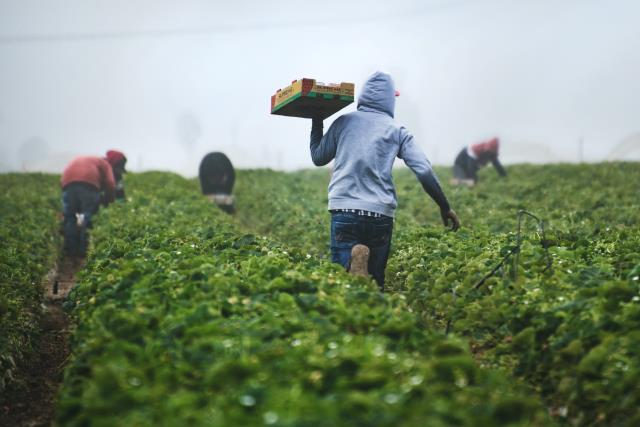
“The horticulture sector is a priority for the FWO, given its history of high non-compliance with workplace laws and large proportion of vulnerable workers employed on farms and orchards, particularly young people on working holidays, migrants and visa holders.
“We have rated horticulture as a high-risk industry sector and agriculture, generally, is a priority for us because of its:
1. High incidence of non-compliance.
2. High proportion of vulnerable workers – particularly young backpackers, and/or migrant/visa holder workers.
1. Often remote locations.
2. Prevalence of labour hire arrangements.
3. Nature of work (manually intensive, often low-skilled, seasonal).”
AUSVEG said it has long warned of the impact on the vegetable industry in particular of the increasing compliance burden, to the point it is now one of the major reasons for growers considering exiting the sector.
AUSVEG has commissioned Corporate Value Associates to undertake an independent and comprehensive White Paper, Horticulture Compliance and Regulation: Reducing the Burden by 2030, to map out an efficient and streamlined regulatory future for the industry.
The White Paper will propose both short and longer-term solutions to reduce duplication, streamline processes, prioritise risk-based compliance, and increase efficiencies.
AUSVEG chief executive Michael Coote said in its most recent industry sentiment survey, from January, more than 30 per cent of respondents indicated they were seriously considering exiting the industry in the next 12 months.
And the increasing regulation and compliance requirements, alongside escalating input costs and poor price returns, were confirmed as the main reasons.
Mr Coote said compliance and regulation does not just include local, State and Federal Government legislation but a suite of other requirements imposed by service providers, supply chain businesses, industry codes of conduct, and local regulatory bodies.
“We are also seeking to analyse the true cost of compliance, with the White Paper investigating all aspects including training costs, human resources, implementation costs, audit costs and associated fees and charges such as licences and certificates,” he said.
“With the vegetable sector producing 98 per cent of fresh vegetables consumed in Australia every year, its viability is critical to national food security, and for thriving regional communities.
“AUSVEG is calling on governments and other stakeholders to engage with industry and adopt the White Paper’s forthcoming recommendations, which will deliver the reform growers need.
“For serious reform to occur we need to move on from anecdotal evidence to data driven, research-based analytics.
“We need to understand what constitutes the compliance burden in horticulture, how much is it costing, and what practical actions can be taken to reduce or simplify the burden.
“This significant body of work is groundbreaking and will provide a robust agenda for necessary compliance reform in the coming years.
“Growers accept certain regulations are necessary to protect consumers, employees and themselves. But the ever-increasing volume, duplication, cost and complexity of compliance is becoming a significant burden, and is often not commensurate with the risks, the cost, or the benefits.
“It is time for smarter, not more, regulation. Let growers get back to growing food – not filling in forms.”