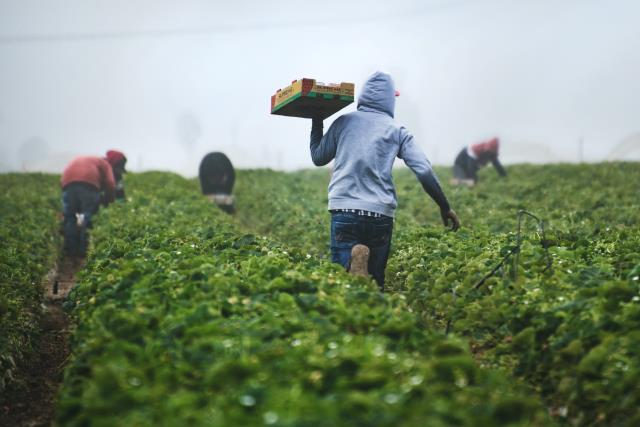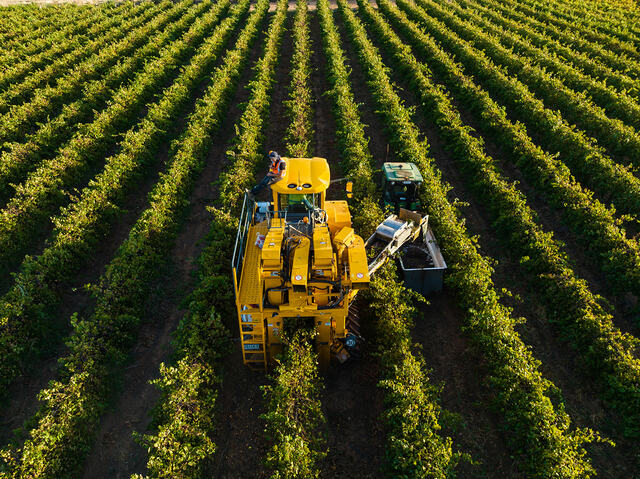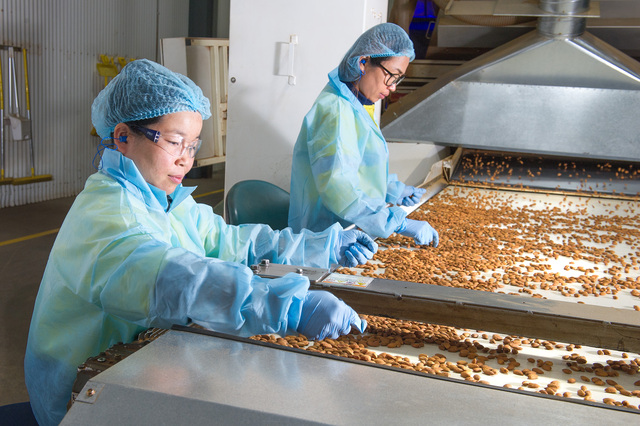
SUNRAYSIA’s summer harvest attracts travellers on working holidays from all over the world, particularly Europe.
These workers perform a vital service for regional communities.
Willing to tough it out in the hot sun for their 88 days, enjoy the river lifestyle and, if they’re lucky, save a bit of cash before departing for further Aussie adventures.
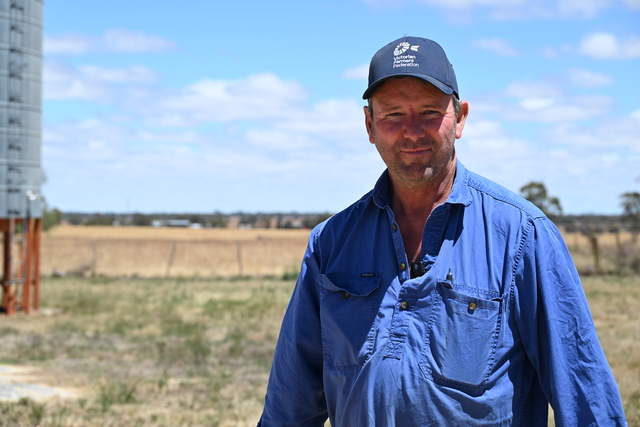
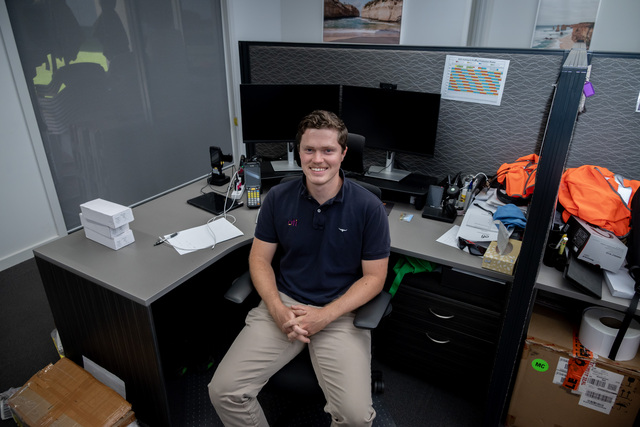
English-born Greg Lewis is an exception, choosing to stay and build a life in the area.
The sports-mad Mr Lewis grew up in Shropshire in the West Midlands, before crossing the border to complete a Sports and Exercise Science degree at Cardiff Metropolitan University in Wales.
“I first came to Australia after I graduated from university in 2012,” he said.
“Initially I was here on a six-month trip so I could get to know some relatives and then explore the country.”
“I started with the Costa Group in Robinvale during grape harvest, which I enjoyed, before spending time travelling up the east coast.”
Mr Lewis initially planned to return home and pursue a career in sports analytics, with an ultimate dream of working alongside his Premier League football and test cricket idols.
However, upon arrival, he quickly demonstrated a work ethic and aptitude that appealed to his employers, while enjoying farm life in Australia much more than he had back home.
“In 2014 I moved over to work for Olam Orchards, living in Robinvale and working in Wemen.”
“My experience of farming in the UK was a traditional family farm where my dad spent many hours working on his own getting everything done that needed to be done,” he said.
“This was not an attractive career for me. However, agribusiness and corporate farming has a very different feel as the intensity requires large teams and the scale allows for specialisation and analytics that can’t be afforded on a family farm.”
This love of a collaborative working environment, combined with his rapidly developing understanding of emerging farming technology, proved to be the right fit for Mr Lewis, who didn’t need much convincing when asked to stay in Sunraysia long-term.
“The lifestyle here is fantastic with weather conducive to spending plenty of time outdoors year-round, playing sports and spending plenty of time enjoying the river.”
A talented cricketer and football player, Mr Lewis was quick to sign up for the Mildura West Cricket Club and Three Colours Soccer Club, quickly establishing himself as a key A grade player in both pursuits.
Then, after a few years of working hard out in the fields and having fun with his mates on the field, he found love and quickly made the choice to become a permanent resident.
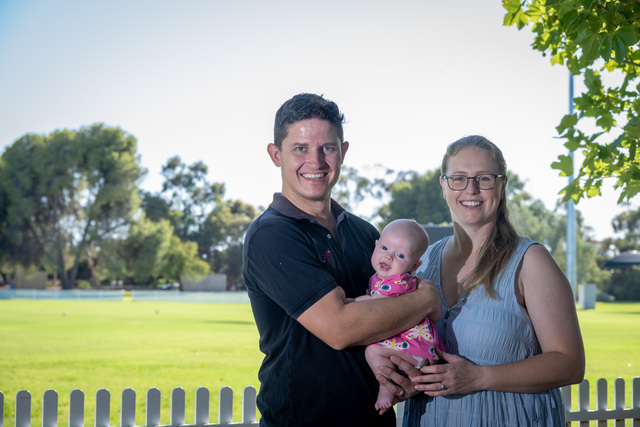
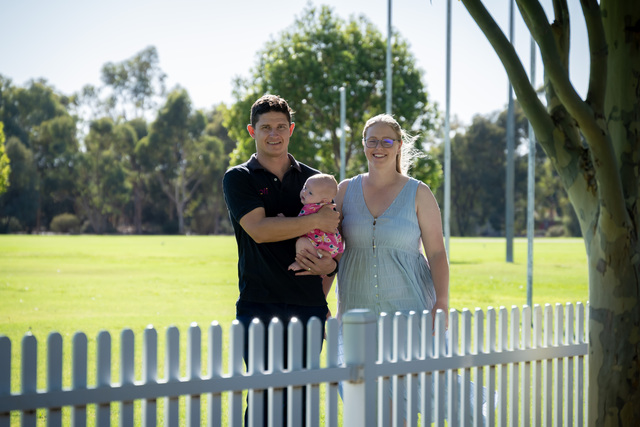
“I met Emily in 2017. She was born and raised in Mildura. Having her family around, and a great social circle around us as we start our own family, is really important to us,” he said.
Ms Lewis is currently on maternity leave from her position as Senior Accountant at Agromillora in Irymple. Their beautiful daughter Isabella is three-months old.
Firmly established at Olam, Mr Lewis chose to advance his prospects by completing a Graduate Certificate in Agribusiness at Marcus Oldham College in Geelong, which he completed in 2019.
This helped him to develop his understanding of global agriculture, as well as technical skills that could be practically applied to local conditions.
“I completed the course online with great support from my employer. I studied financial analysis, systems analysis and contemporary global agriculture subjects. I aim to complete my Masters in the future to further develop my understanding as I progress in my career towards operations and general management positions,” he said.
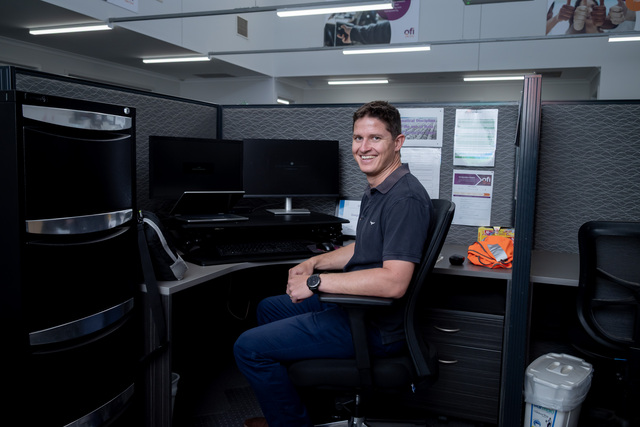
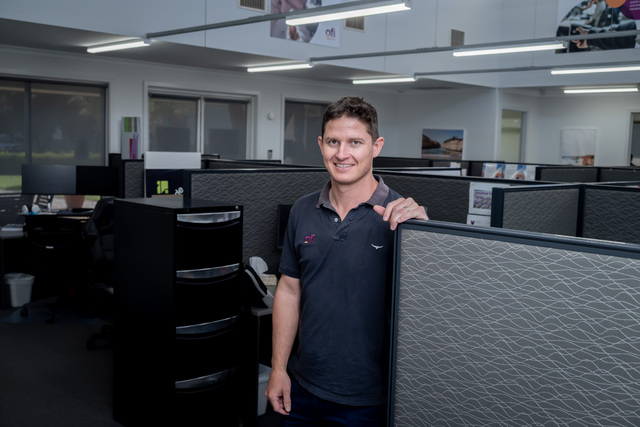
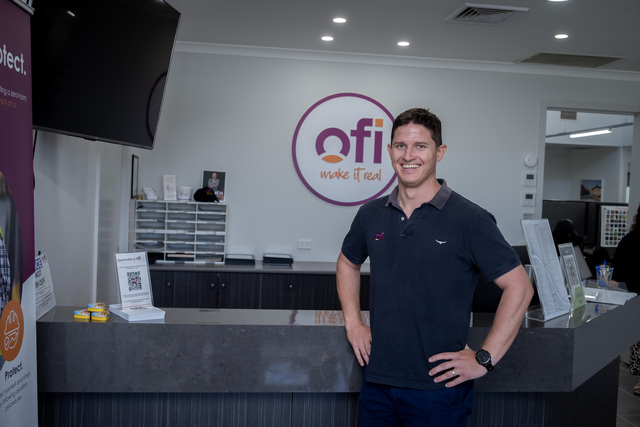
In his current role as an Operations Analyst, Mr Lewis is responsible for the key role of weather forecasting for all farms in the Olam Group.
“We go as far north as Hillston near Griffith on the New South Wales side of the border and south to Nyah near Swan Hill. It’s vital that these predictions are accurate, as waterlogged soil is bad news for almonds.”
Mr Lewis identified access to water as the key difference between farming in the UK and Australia, although he said the lack of rainfall in the Mallee was not always a detriment to almond growth.
“The most significant difference is irrigation vs drainage. In the UK, the focus is on drainage away from wet areas due to the abundant rainfall. Whereas here irrigation is the major source of water for our crop. The infrastructure and technology required to do this with accuracy gives a completely different appearance to the farms.
“The desert-like conditions of extreme summer heat and icy-cold winter mornings certainly present a challenge, but it is this unusual combination that creates the perfect climate for almonds.
“The soil profile ranges greatly from the Mallee sand dunes into the more loamy fringes of the Murray floodplains and this variation requires some very precise irrigation practices to ensure that our trees get as even a water and fertiliser supply as possible.”
Mr Lewis said that Sunraysia’s generally agreeable conditions, combined with its ideal location and access to a secure water source, made him optimistic about the future of almond farming in the region.
“There are a couple of major advantages that I see, the first being our alternate seasons to most other almond producing regions in the northern hemisphere. The second being our proximity to Asia as our major export market,” he said.
“The Murray River also provides high security water, which is an invaluable asset to have for irrigated horticulture.”
As he masters the art and science of Agribusiness, Mr Lewis spoke optimistically of the opportunities for others to follow a similar path.
“There’s so much opportunity for growth in the industry but not everyone is prepared to do the work. Twelve hours a day isn’t for everyone. Many of our skilled workforce, such as our agronomists, have been recruited from overseas, including New Zealand and South Africa.
“The thing that stands out most about our local community and especially those involved in horticulture is the multicultural workforce. There are so many people excited about the opportunities available to them by working hard in our local horticulture industry.
“This has had a great impact on my own leadership style, as I see the value of learning what motivates individuals to come to work and work hard each day.”
Mr Lewis said these were opportunities that could be taken up by locals, if they were so inclined.
“A lot of people don’t realise that Olam is one of the largest employers in the region. Young Aussies sometimes want to come back and work on the farm but they need to be aware of the changes in the industry and the types of skills that will be valuable in the future.
“The biggest change we are seeing to the way in which we farm is autonomy and the Internet of Things (IoT) technology. There is great opportunity in collecting data from our trees and adjusting our practices to increase our yield.”
Mr Lewis said Olam currently employed eight people to operate 16 ground-based remote-control sprayers.
“Automation will be key in the future of agriculture as we continue to see challenges in our workforce. Olam Orchards Australia continues to work towards our sustainability goals for water, pollinators, energy and community in particular.”
One young local who has taken up an opportunity is Sean Pain, who is responsible for supporting the information technology infrastructure at Olam.
Raised in Irymple and educated at Mildura Senior College, Mr Pain moved away to complete his Software Engineering degree at Deakin University in Melbourne.
He could have followed the path of many young Mildurians and opted to stay in the state’s capital.
However, with his partner Tiana also working locally, Mr Pain said he was glad to have gained employment in a growing industry, working with innovative technology.
“I was never going to be a farmer. I was always going to work in IT. Now I get to stay close to home, which is perfect for me,” he said.