It’s a lot to soak in for farm roads

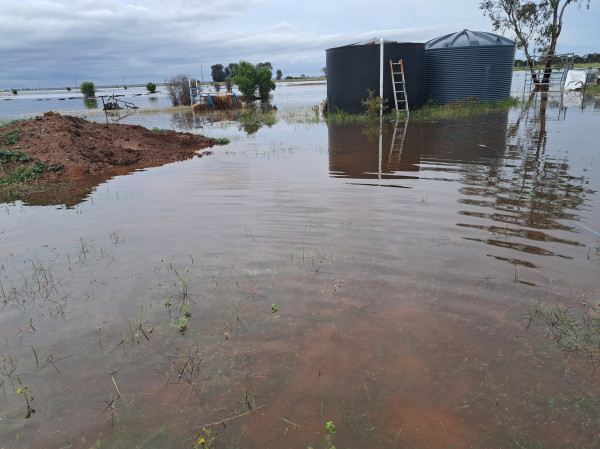
SEVERAL wild and wet weather events across northern Victoria have compounded damage already caused by December’s that included soil erosion on farm roads, tracks and driveways.

While some of the massive falls, which dumped 100mm-plus in a few hours, not days or weeks, would overwhelm most systems, Agriculture Victoria land management extension officer Clem Sturmfels said the key to controlling this damage was drainage.

“Good surface drainage, wide stable table drains and closely spaced run-offs to direct the water away from the roadway are vital,” Mr Sturmfels said.

“Additionally, the roadway needs to have stable, well drained foundations and a hard-wearing gravel, concrete or bitumen surface.”

Class 1 and Class 2 materials – a mix of quarry dust and larger aggregate – make for a very stable and hard-wearing surface without the need for a surface seal.

“Roadways can be constructed on quite steep slopes using these techniques,” he said.

“A well-built road should only require occasional grading and a top dressing with gravel every few years.

“And roadways cut into the side of a hill will need regular culverts or other forms of cross drainage.

“A simple speed hump or roll-over is a cheap and easy way to divert water.

“Wherever possible, roads, tracks and driveways should follow ridgelines to minimise the need for cross drainage.”

Mr Sturmfels suggested the best way to create good surface drainage was by crowning up the centre of the roadway.

The crown needs to be high enough to rapidly shed water away from the centre of the road. An alternative method, commonly used on bush tracks, is to slope the road surface into, or away from the side of a hill.

Roadside table drains should have a flat base to spread and slow the speed of the water, and ideally will have a good cover of grass to protect them from erosion.

“A well-established grass table drain can safely carry a similar flow of water to a typical rock lined drain.

“If using a rock lined drain, it’s important to make it wide and deep enough to carry the anticipated flow.

“Run-offs or cut-off drains are used to take water from the table drain to a safe disposal area. They should be spaced 50 to 100 metres apart on gently sloping roadways, but only 15 to 20m apart on steep roads, tracks and driveways.”

If you have any questions, Mr Sturmfels said he was happy to answer them at clem.sturmfels@deeca.vic.gov.au.
Digital Editions


  • Collection under the hammer

    Collection under the hammer

    AN eclectic curation of vintage and antique Australian pastoral machinery and memorabilia will go to auction on 1 February. Yvon Smythe and her late partner,…

More News

  • Calls flow for royal commission

    Calls flow for royal commission

    Purchase this photo from Pic Store: 524159 AUSTRALIA needs a royal commission into water management in 2026, according to Murray MP Helen Dalton, who says politicians are “destroying” the nation’s…

  • Big skies and farmscapes

    Big skies and farmscapes

    Purchase this photo from Pic Store: 524028 THE Gallery Balranald is currently showcasing the work of professional artist Graham Hearn. His latest exhibition, Big Skies and Farmscapes, reflects the vast scale and…

  • Difficult outlook for grape growers

    Difficult outlook for grape growers

    Murray Valley Winegrowers has acknowledged the findings of Wine Australia’s Australian Wine Production, Sales and Inventory Report 2025, which confirms the challenging market conditions facing growers. The newly released report…

  • Benham appointed to new ag role

    Benham appointed to new ag role

    The Nationals member for Mildura, Jade Benham, has been appointed Shadow Assistant Minister for Agriculture and Regional Development, as part of Jess Wilson’s new Shadow Cabinet announcement. Ms Benham said…

  • Connecting urban and rural Australia

    Connecting urban and rural Australia

    HAMISH McIntyre grew up on the land in Queensland, learning the rhythms of farming from his family. Today, he runs a sprawling family business across the St George, Dirranbandi, Quilpie,…

  • Farmers warned to stay alert

    Farmers warned to stay alert

    A RUN of booming haystack and shed fires across regional Victoria has sparked fresh warnings for farmers as hay season rolls into full swing. Fire crews in the west and…

  • Bumper harvest fuels Cobram Estate’s growth

    Bumper harvest fuels Cobram Estate’s growth

    COBRAM Estate Olives has reported one of its strongest years on record, with an exceptional “on-year’’ harvest in Australia driving improved earnings, higher production volumes and a confident outlook from…

  • Select Harvests’ cracking pace

    Select Harvests’ cracking pace

    SELECT Harvests Limited has released its 2025 business update, reporting a final almond crop estimate of 24,700 tonnes, slightly below the midpoint of its earlier forecast. The company says the…

  • Further water buybacks anger farming industry

    Further water buybacks anger farming industry

    FARMERS, politicians and advocacy bodies are warning further water buybacks announced last week will gut regional towns, drive up food prices and cripple Australia’s dairy heartland. Federal Water Minister Murray…

  • Farmer takes action in feral pig fight

    Farmer takes action in feral pig fight

    IN THE heart of south-western New South Wales, sheep and cattle farmer Colin McCrabb is waging a quiet war against a destructive and elusive enemy -feral pigs. Operating a 6800-hectare…