How to get ripper results

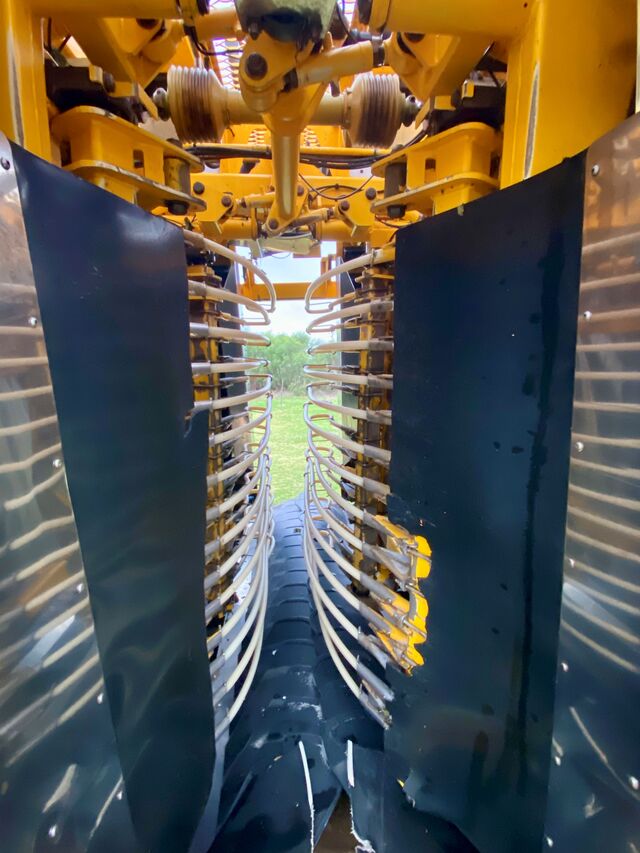
MALLEE Sustainable Farming says when you are spending big on soil amelioration, every pass of the ripper counts.

That’s why the GRDC national grower network project Optimising Soil Amelioration in Typical Mallee Soils set out to answer a big question: “How do we get the most bangs for our bucks when deep ripping”?

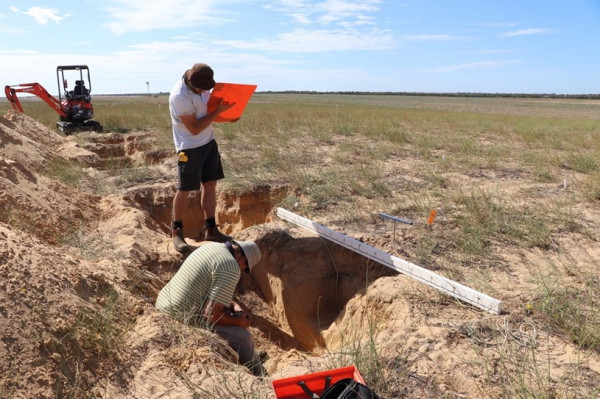
In 2024 the MSF trial site at Copeville, South Australia, where UniSA’s Chris Saunders and Frontier Farming Systems had set up a ripping trial to compare different tine configurations, but final results were not available then.

The only data was force measurements, fuel use and some promising visual differences between treatments.

But now, with harvest done and dusted, the results are in – and MSF said they are results worth talking about.

The Setup

The trial compared:

*     Standard ripping.

*     High efficiency ripping (lower draft, wider spacing, less steel).

*     Maximum loosening setups.

*     Ripping with inclusion plates.

*     And a commercial Bednar ripper as a farmer practice comparison.

Each setup was measured for its power requirements, soil loosening impact, and most importantly, its effect on barley yield in a tough, low rainfall year.

What was learnt?

The control plots (no ripping) came in at around 0.73 t/ha. From there:

*     Standard ripping jumped to 1.36 t/ha.

*     High efficiency ripping pushed yields up to 1.51 t/ha.

*     Maximum loosening ripping delivered 1.49 t/ha.

*     The Bednar ripper increased yield to 1.2 t/ha.

*     But ripping with inclusion plates stole the show, reaching 1.71 t/ha.

While the inclusion plates weren’t a core part of the project, they clearly made a difference in this deep sand paddock, where non-wetting soils were a known issue.

It’s not just about yield, it’s about ROI

When Frontier Farming Systems crunched the numbers on partial gross margins, the high efficiency ripper came out on top.

It delivered the best return per hectare when you factored in fuel, labour, and machinery costs.

Here’s the breakdown:

*     Standard ripping: +$66/ha.

*     Maximum loosening: +$82/ha.

*     High efficiency ripping: +$109/ha.

The key takeaway? If you can get the same or better yield from a ripping setup which uses less power and fewer tines then you’re way ahead.

Key messages for growers

*     You don’t always need a bigger tractor. Smarter tine setup might get you the same result without the extra capital spend.

*     Dry seasons still respond. Even in low rainfall, the ripping treatments made a clear difference in yield.

*     Inclusion plates are worth watching. They’re not widely available yet, but in deep sand, they can be a game-changer.

For more details go to msfp.org.au/projects/optimising-soil-amelioration-costs/

Digital Editions


  • Collection under the hammer

    Collection under the hammer

    AN eclectic curation of vintage and antique Australian pastoral machinery and memorabilia will go to auction on 1 February. Yvon Smythe and her late partner,…

More News

  • Calls flow for royal commission

    Calls flow for royal commission

    Purchase this photo from Pic Store: 524159 AUSTRALIA needs a royal commission into water management in 2026, according to Murray MP Helen Dalton, who says politicians are “destroying” the nation’s…

  • Big skies and farmscapes

    Big skies and farmscapes

    Purchase this photo from Pic Store: 524028 THE Gallery Balranald is currently showcasing the work of professional artist Graham Hearn. His latest exhibition, Big Skies and Farmscapes, reflects the vast scale and…

  • Difficult outlook for grape growers

    Difficult outlook for grape growers

    Murray Valley Winegrowers has acknowledged the findings of Wine Australia’s Australian Wine Production, Sales and Inventory Report 2025, which confirms the challenging market conditions facing growers. The newly released report…

  • Benham appointed to new ag role

    Benham appointed to new ag role

    The Nationals member for Mildura, Jade Benham, has been appointed Shadow Assistant Minister for Agriculture and Regional Development, as part of Jess Wilson’s new Shadow Cabinet announcement. Ms Benham said…

  • Connecting urban and rural Australia

    Connecting urban and rural Australia

    HAMISH McIntyre grew up on the land in Queensland, learning the rhythms of farming from his family. Today, he runs a sprawling family business across the St George, Dirranbandi, Quilpie,…

  • Farmers warned to stay alert

    Farmers warned to stay alert

    A RUN of booming haystack and shed fires across regional Victoria has sparked fresh warnings for farmers as hay season rolls into full swing. Fire crews in the west and…

  • Bumper harvest fuels Cobram Estate’s growth

    Bumper harvest fuels Cobram Estate’s growth

    COBRAM Estate Olives has reported one of its strongest years on record, with an exceptional “on-year’’ harvest in Australia driving improved earnings, higher production volumes and a confident outlook from…

  • Select Harvests’ cracking pace

    Select Harvests’ cracking pace

    SELECT Harvests Limited has released its 2025 business update, reporting a final almond crop estimate of 24,700 tonnes, slightly below the midpoint of its earlier forecast. The company says the…

  • Further water buybacks anger farming industry

    Further water buybacks anger farming industry

    FARMERS, politicians and advocacy bodies are warning further water buybacks announced last week will gut regional towns, drive up food prices and cripple Australia’s dairy heartland. Federal Water Minister Murray…

  • Farmer takes action in feral pig fight

    Farmer takes action in feral pig fight

    IN THE heart of south-western New South Wales, sheep and cattle farmer Colin McCrabb is waging a quiet war against a destructive and elusive enemy -feral pigs. Operating a 6800-hectare…