Algae alert for stock water

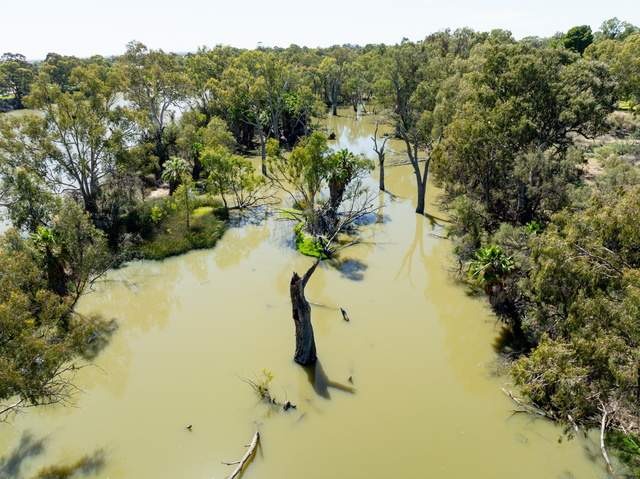
RECENT flooding, combined with warmer weather conditions, has produced favourable conditions for blue-green algae to thrive in farm water supplies and standing floodwaters.

Agriculture Victoria senior veterinary officer Dianne Phillips, says livestock owners need to remain alert as ingestion of blue-green algae could result in the poisoning of livestock.

“As there is no specific treatment for blue-green algae poisoning, producers should check standing bodies of water and farm water supplies daily for blooms, as this remains the most effective way of preventing stock deaths,” Dr Phillips says.

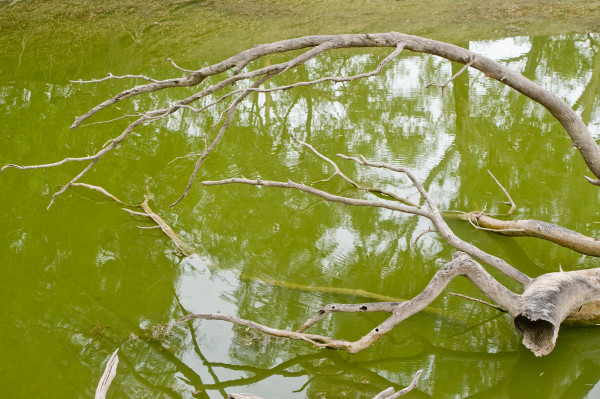
“Blue-green algal blooms typically appear as surface scum that looks like a suspension of green paint, often with an earthy smell.

“However, the colour may range from pale green to dark brown.”

Deaths can occur when stock drink toxins produced by the blue-green algae, often when it is concentrated on the downwind side of a water supply and has formed a dense, surface scum.

Animals that have consumed blue-green algal toxin may appear ill very rapidly, develop a staggering gait, collapse, begin to convulse and die – typically within 24 hours – depending on the toxicity of the bloom and the concentration of the toxin.

Those that don’t die immediately often suffer severe liver damage. This may lead to the development of jaundice (the yellows) or photosensitisation over the next few days.

Livestock that recover from these ailments often suffer from chronic ill-thrift.

If a suspicious bloom is noticed, the water supply should be isolated as quickly as possible, and a safe alternative water supply provided.

“Where possible, producers should identify an alternative water supply prior to their primary source of livestock drinking water being affected by a bloom,” Dr Phillips says.

“There may not be time to identify an alternative water source once the primary water supply is affected.

“We recommend laboratory testing of the water supply for the presence of blue-green algae and a post-mortem or examination of dead or sick animals by a veterinarian.”

Contaminated water should not be used to irrigate vegetables and fruit or come in contact with plants being grown for food, particularly fruit and vegetables that are mostly eaten raw, such as apples, grapes, tomatoes, strawberries, cabbages and other salad greens.

Dr Phillips says dogs are also prone to poisoning as they can swim in farm water supplies and should be kept away from suspect water sources.

Further information on blue-green contamination in livestock water supplies is available at go.vic.gov.au/3UR90aO.

The information note Managing Contaminated Stock Water is also available at agriculture.vic.gov.au/farm-management/emergency-management/floods/managing-contaminated-livestock-water, which steps through how to manage flood contaminated stock water supplies

Digital Editions


  • Collection under the hammer

    Collection under the hammer

    AN eclectic curation of vintage and antique Australian pastoral machinery and memorabilia will go to auction on 1 February. Yvon Smythe and her late partner,…

More News

  • Calls flow for royal commission

    Calls flow for royal commission

    Purchase this photo from Pic Store: 524159 AUSTRALIA needs a royal commission into water management in 2026, according to Murray MP Helen Dalton, who says politicians are “destroying” the nation’s…

  • Big skies and farmscapes

    Big skies and farmscapes

    Purchase this photo from Pic Store: 524028 THE Gallery Balranald is currently showcasing the work of professional artist Graham Hearn. His latest exhibition, Big Skies and Farmscapes, reflects the vast scale and…

  • Difficult outlook for grape growers

    Difficult outlook for grape growers

    Murray Valley Winegrowers has acknowledged the findings of Wine Australia’s Australian Wine Production, Sales and Inventory Report 2025, which confirms the challenging market conditions facing growers. The newly released report…

  • Benham appointed to new ag role

    Benham appointed to new ag role

    The Nationals member for Mildura, Jade Benham, has been appointed Shadow Assistant Minister for Agriculture and Regional Development, as part of Jess Wilson’s new Shadow Cabinet announcement. Ms Benham said…

  • Connecting urban and rural Australia

    Connecting urban and rural Australia

    HAMISH McIntyre grew up on the land in Queensland, learning the rhythms of farming from his family. Today, he runs a sprawling family business across the St George, Dirranbandi, Quilpie,…

  • Farmers warned to stay alert

    Farmers warned to stay alert

    A RUN of booming haystack and shed fires across regional Victoria has sparked fresh warnings for farmers as hay season rolls into full swing. Fire crews in the west and…

  • Bumper harvest fuels Cobram Estate’s growth

    Bumper harvest fuels Cobram Estate’s growth

    COBRAM Estate Olives has reported one of its strongest years on record, with an exceptional “on-year’’ harvest in Australia driving improved earnings, higher production volumes and a confident outlook from…

  • Select Harvests’ cracking pace

    Select Harvests’ cracking pace

    SELECT Harvests Limited has released its 2025 business update, reporting a final almond crop estimate of 24,700 tonnes, slightly below the midpoint of its earlier forecast. The company says the…

  • Further water buybacks anger farming industry

    Further water buybacks anger farming industry

    FARMERS, politicians and advocacy bodies are warning further water buybacks announced last week will gut regional towns, drive up food prices and cripple Australia’s dairy heartland. Federal Water Minister Murray…

  • Farmer takes action in feral pig fight

    Farmer takes action in feral pig fight

    IN THE heart of south-western New South Wales, sheep and cattle farmer Colin McCrabb is waging a quiet war against a destructive and elusive enemy -feral pigs. Operating a 6800-hectare…